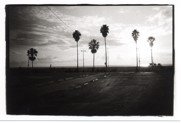
...minus the fishing part. (though writing is a lot like fishing. you throw out a line and see what bites.)
Be back in a week or so with a bit of a tan and a bounce in my step. Cheers...
3.24.2007


3.21.2007
On Pause:
Where the Physical and the Mental Sip Tea
I’m on pause, that place of immobility where even attempts at action result in pause, such as repeatedly hitting the play button on the DVD remote that offers no result unless you count ‘staying as is’ as a result, the unacknowledged and much maligned result that if properly examined is as much of a result as any.
Got that? Reach for tea. Sip. Continue.
I battle pause due to my overdeveloped relationship with forward. Forward is my buddy. We toast often, glancing back over our shoulders at where we’ve been. In our religion, we pray to next. ‘As is’ is tough for pause skeptics. Believers try to tell us of its value, and we smirk saying, “I don’t want to simply live like a dog and accept,” even though of course we would. We just don’t know how.
I think of treadmills. Inconsequentially. The moving and unmovingness of those wannabe sidewalks make me smile and that is a tiny departure from pause, kind of like one frame forward on the DVD. Undetectable progress, perhaps, but progress nonetheless.
Smiling is good. Smiling beats its opponent.
The paddy wagon knocks at my door, but I say I’m busy learning about pause, so I can’t come to the door right now. Have you ever seen a paddy wagon? They move in a staccato kind of way as if they haven’t caught on to 24fps. Those of you in video world should insert 30fps thinking, but I’m old school and I think in film. We are a dying breed, I am warned, as if I didn’t know that, as if I thought forever lived in my DNA. Well, maybe it does. In my DNA. But in this case that indicates that my DNA isn’t really me because while my DNA can live forever, I cannot. I am a dying breed. Just ask anyone who still develops film. And if you find that kind of logic circular, I invite you to join me on the treadmill where circularity is welcome and appreciated.
Pause is interesting, I say to Forward as my tea reaches a comfortable temperature. Forward replies that pause looks a lot like insanity.
Bah humbug, I retort because no one likes a killjoy.
The tenor of this discussion indicates a need for vacation, a change of scenery, which some would interpret as challenging pause to a duel. While I’m not a fighter, ‘duel’ has an appealing romantic quality to it, so I nod, and say, “Yes, yes. That is what must be done.” Pause, I take you on.
In other words, I’m going on vacation. Sort of. A writing vacation in the company of others who wield pens. Far, far away where palm trees sway and I will learn the hula. If you think all of this has been crazy, picture me doing the hula. If that image doesn’t scare you, you’re not properly informed.
Got that? Reach for tea. Sip. Continue.
I battle pause due to my overdeveloped relationship with forward. Forward is my buddy. We toast often, glancing back over our shoulders at where we’ve been. In our religion, we pray to next. ‘As is’ is tough for pause skeptics. Believers try to tell us of its value, and we smirk saying, “I don’t want to simply live like a dog and accept,” even though of course we would. We just don’t know how.
I think of treadmills. Inconsequentially. The moving and unmovingness of those wannabe sidewalks make me smile and that is a tiny departure from pause, kind of like one frame forward on the DVD. Undetectable progress, perhaps, but progress nonetheless.
Smiling is good. Smiling beats its opponent.
The paddy wagon knocks at my door, but I say I’m busy learning about pause, so I can’t come to the door right now. Have you ever seen a paddy wagon? They move in a staccato kind of way as if they haven’t caught on to 24fps. Those of you in video world should insert 30fps thinking, but I’m old school and I think in film. We are a dying breed, I am warned, as if I didn’t know that, as if I thought forever lived in my DNA. Well, maybe it does. In my DNA. But in this case that indicates that my DNA isn’t really me because while my DNA can live forever, I cannot. I am a dying breed. Just ask anyone who still develops film. And if you find that kind of logic circular, I invite you to join me on the treadmill where circularity is welcome and appreciated.
Pause is interesting, I say to Forward as my tea reaches a comfortable temperature. Forward replies that pause looks a lot like insanity.
Bah humbug, I retort because no one likes a killjoy.
The tenor of this discussion indicates a need for vacation, a change of scenery, which some would interpret as challenging pause to a duel. While I’m not a fighter, ‘duel’ has an appealing romantic quality to it, so I nod, and say, “Yes, yes. That is what must be done.” Pause, I take you on.
In other words, I’m going on vacation. Sort of. A writing vacation in the company of others who wield pens. Far, far away where palm trees sway and I will learn the hula. If you think all of this has been crazy, picture me doing the hula. If that image doesn’t scare you, you’re not properly informed.
Tags:
3.16.2007
Fringe People
You know fringe people. We glide amongst you down city streets. We drink coffee nearby as you pour through notes and scratch out reminders preparing for your next engagement. You laugh joyously with a friend as she details last night’s misadventure, and we watch. We see the sad child-eyes when a parent gets too angry. The dog running off-leash, he is in our visual care.
Some seek the comfort of being enfolded while fringe people need to reside in the outer position, a place that allows the freedom to flee at the first hint of danger. You invite us to join, and we accept, yet even when there we observe.
We play with our duality, the ability to participate and watch at the same time. Inside and outside simultaneously, we try to explain. You smile and nod but aren’t certain you understand. And we know this.
When others say they struggle to be alone with themselves it is our turn with confusion, for intimacy with our thoughts is what we know as home. Sometimes we feel guilt for our place on the fringe, as if we’re defying the biological imperative to bond. And then we ease into our thoughts and recognize our hard wiring as our imperative. With an inhale and an exhale we accept.
Some seek the comfort of being enfolded while fringe people need to reside in the outer position, a place that allows the freedom to flee at the first hint of danger. You invite us to join, and we accept, yet even when there we observe.
We play with our duality, the ability to participate and watch at the same time. Inside and outside simultaneously, we try to explain. You smile and nod but aren’t certain you understand. And we know this.
When others say they struggle to be alone with themselves it is our turn with confusion, for intimacy with our thoughts is what we know as home. Sometimes we feel guilt for our place on the fringe, as if we’re defying the biological imperative to bond. And then we ease into our thoughts and recognize our hard wiring as our imperative. With an inhale and an exhale we accept.
Tags:
3.13.2007
The Wild West
New street-side accoutrements are popping up in my adjoining neighborhoods, and I’m certain I’m witnessing the birth of a cultural revolution. I’ll call it ‘Governance by Guilt.’ Children raised in certain households will recognize the method.
Our cars are outfitted with accurate, visibly placed speedometers, yet on my daily commute I now am greeted by large monitors that display the speed of approaching cars on a screen directly below the speed limit. Most of us knowingly speed, so confronting us with our transgression is hardly illuminating. On the other hand, the public shaming aspect of this tactic is highly effective. I can’t help myself. As I see the device looming in the distance, I slow down, an involuntary reaction to ward off criticism.
Those monitoring our streets are onto something. We will start driving slower, at least when facing these signs. We may not actually ever drop so low as to hit the speed limit, but each one of us will determine our own acceptable level of disobedience and tack that number onto the legal maximum. After all, this is already fairly common psychology amongst freeway drivers. Take a poll. Most believe that driving 5 mph over the speed limit on freeways isn’t even speeding. “You can’t get a ticket for that,” these drivers will say. I dare not counter, “Of course you can,” because that is not a welcome response. Furthermore, no one ever goes just 5 mph over the speed limit anymore. That’s so 1970s.
In Los Angeles, we’ve basically adopted the attitude that you can drive as fast as traffic will allow because it is such a rarity to see a clear street that when we do we feel as if we’ve landed on open course day at the race track and just let it rip. (Please note, around schools such behavior is frowned upon even by the most diehard of traffic whiners.)
What I find most disconcerting about this trend is that drivers will actually begin to drive more slowly and then traffic will back up even worse in LA. We just don’t need that. Road rage will peak, and we will be in the news for all kinds of bizarre incidents.
What I’d really like to know is why the 30 mph limit is so widespread. Have you ever tried driving 30 mph? It feels like you aren’t moving. The close second is 35 mph, which I just consider a typo. 40 is more like it, but when we encounter 45 mph, we begin to see the word ‘reasonable’ instead of numbers. Unless of course, it’s on a freeway ramp, in which case we tell ourselves, “I can easily take that turn at 60.”
Despite my discomfort with these devices, the most laudatory aspect is that they’re solar powered. It’s amazing how a city can innovate when motivated. In the spirit of forward thinking, I think my city should mandate solar powered contraptions everywhere. Hanging off buildings, powering streetlights, running the gas pumps at gas stations. Wouldn’t that be a nudge to the energy industry?
In the meantime, I’m off to reset our alarm clocks. Due to the trickledown effect, if I’m going to start driving the speed limit, it’s going to require my leaving home earlier in the morning. It was one thing to begin daylight savings sooner this year, but forcing me to drive slowly and wake up even earlier? I just don’t know how much change a person can take.
Our cars are outfitted with accurate, visibly placed speedometers, yet on my daily commute I now am greeted by large monitors that display the speed of approaching cars on a screen directly below the speed limit. Most of us knowingly speed, so confronting us with our transgression is hardly illuminating. On the other hand, the
 public shaming aspect of this tactic is highly effective. I can’t help myself. As I see the device looming in the distance, I slow down, an involuntary reaction to ward off criticism.
Those monitoring our streets are onto something. We will start driving slower, at least when facing these signs. We may not actually ever drop so low as to hit the speed limit, but each one of us will determine our own acceptable level of disobedience and tack that number onto the legal maximum. After all, this is already fairly common psychology amongst freeway drivers. Take a poll. Most believe that driving 5 mph over the speed limit on freeways isn’t even speeding. “You can’t get a ticket for that,” these drivers will say. I dare not counter, “Of course you can,” because that is not a welcome response. Furthermore, no one ever goes just 5 mph over the speed limit anymore. That’s so 1970s.
In Los Angeles, we’ve basically adopted the attitude that you can drive as fast as traffic will allow because it is such a rarity to see a clear street that when we do we feel as if we’ve landed on open course day at the race track and just let it rip. (Please note, around schools such behavior is frowned upon even by the most diehard of traffic whiners.)
What I find most disconcerting about this trend is that drivers will actually begin to drive more slowly and then traffic will back up even worse in LA. We just don’t need that. Road rage will peak, and we will be in the news for all kinds of bizarre incidents.
What I’d really like to know is why the 30 mph limit is so widespread. Have you ever tried driving 30 mph? It feels like you aren’t moving. The close second is 35 mph, which I just consider a typo. 40 is more like it, but when we encounter 45 mph, we begin to see the word ‘reasonable’ instead of numbers. Unless of course, it’s on a freeway ramp, in which case we tell ourselves, “I can easily take that turn at 60.”
Despite my discomfort with these devices, the most laudatory aspect is that they’re solar powered. It’s amazing how a city can innovate when motivated. In the spirit of forward thinking, I think my city should mandate solar powered contraptions everywhere. Hanging off buildings, powering streetlights, running the gas pumps at gas stations. Wouldn’t that be a nudge to the energy industry?
In the meantime, I’m off to reset our alarm clocks. Due to the trickledown effect, if I’m going to start driving the speed limit, it’s going to require my leaving home earlier in the morning. It was one thing to begin daylight savings sooner this year, but forcing me to drive slowly and wake up even earlier? I just don’t know how much change a person can take.
Tags:
3.12.2007
Relativity: the Exhale
[a tidbit on the heels of Relativity, which is required reading for this to mean a thing...]
After she disappeared through the door, he reached for the paper napkin that she’d delicately placed against her lips, and drew it to his nose to see if any scent of her remained. All he smelled was aroma-of-brown-napkin, the distinct scent that indicated a bypassing of the crucial bleaching phase towards purity.
“Or impurity,” his mind interjected. “Bleach is hardly pure.”
He shook his head to shut up his dissenting thoughts, and reached into his coat pocket for a pen. And upon the napkin that had touched his lover’s lips, he started making a list of the pros and cons of their relationship.
She, on the other hand, required no list for guidance. As she exited the coffee house, their life together receded into the background as her eyes focused on the path ahead. Without hesitation she moved forward through determined pedestrians as if part of a virtual reality game, leaning left, leaning right in order not to collide with the fast walkers. Each time she succeeded with minimal sideways momentum, she gave herself a point. By the time she reached the end of the block, she’d scored eleven to the pedestrians’ three.
“Not bad,” she thought. But when she saw the empty bench before her, she crumbled onto it. She thought of starting over and how people turned to newspaper want ads, to page after page of desires and needs. She moaned. She wasn’t organized enough to condense her wishes into a single concise ad.
After she disappeared through the door, he reached for the paper napkin that she’d delicately placed against her lips, and drew it to his nose to see if any scent of her remained. All he smelled was aroma-of-brown-napkin, the distinct scent that indicated a bypassing of the crucial bleaching phase towards purity.
“Or impurity,” his mind interjected. “Bleach is hardly pure.”
He shook his head to shut up his dissenting thoughts, and reached into his coat pocket for a pen. And upon the napkin that had touched his lover’s lips, he started making a list of the pros and cons of their relationship.
She, on the other hand, required no list for guidance. As she exited the coffee house, their life together receded into the background as her eyes focused on the path ahead. Without hesitation she moved forward through determined pedestrians as if part of a virtual reality game, leaning left, leaning right in order not to collide with the fast walkers. Each time she succeeded with minimal sideways momentum, she gave herself a point. By the time she reached the end of the block, she’d scored eleven to the pedestrians’ three.
“Not bad,” she thought. But when she saw the empty bench before her, she crumbled onto it. She thought of starting over and how people turned to newspaper want ads, to page after page of desires and needs. She moaned. She wasn’t organized enough to condense her wishes into a single concise ad.
Tags:
3.09.2007
My Concern is Your Concern
Dear Sitemeter,
I am worried about you, which is kind of a way of saying I’m worried about myself. And no, not all of my relationships are thus structured, but I think you can handle my honesty because we have never pretended that ours is a two-way relationship.
You have refused to share stats with me for three days. I tried emailing your master to determine if you were ill, but I received no response. Either your master is off at a prolonged happy hour, you are truly ailing and master is thus preoccupied, or as a non-paying customer I am of little concern. I don’t know which of these possibilities I would most embrace.
The truth is that with you out of commission my stalking behavior is hampered. I can no longer discover which kind souls are sending me readers, and therefore I cannot hop back to them and say ‘thank you.’ I like to be gracious, so you see you are harming my reputation by making me seem ungrateful.
I don’t know how long I can let you malinger. At what point do I end our relationship and find a new stalking partner? Have you ever done this to others? I hope you will reply and let me know how to proceed.
Thank you.
Your loyal blog writer who is slowly going mad
UPDATE: the impersonal response snatched off sitemeter's blog...
s25 - Update
We are aware of delays and lag on s25 and are doing are [sic] best to resolve it. In this case we had a particular site that has been running a promotion, nearly quadrupling their traffic. We’re working on relocation [sic] this site to another server. We expect to see the lag dissipate over the weekend.
Thanks,
The Sitemeter Team
Yes, I am part of s25. I can assure you that I am not the site behind the snafu. Quadrupling my traffic would register less than a passing 18 wheeler on the Richter scale (we Californians do care about that Richter scale.)
But really, running a promotion to increase traffic? Interesting. I could use a little more lovin'. Now, what can I offer??? [thinking cap put on and plugged in...]
In the meantime, I've have taken your suggestions and am stepping out on sitemeter. Statcounter, are you ready to dance?
Tags:
3.08.2007
Going to the Well: the First Good-bye
[continued from Going to the Well: The Beginning]
Remembering Our First Farewell – September 1988 – Moscow Airport
The first time I said good-bye to Yuri, it felt final. I blurted out proclamations of reunion, but deep down didn’t believe a word leaving my mouth. In 1988, the barriers between our countries – the U.S. and the U.S.S.R. – remained strong and required many negotiations with bureaucrats to circumvent them.
The Moscow airport was bustling as the 270 American peace walkers searched out Soviet counterparts, our companions of thirty days, to say good-bye. Together we’d navigated propaganda, language barriers, constantly changing schedules. Conspiracy theories had circulated of the Soviet organizers intentionally upsetting our orientation to keep the politics subdued. We’d debated and discussed it all.
But at the boarding gate on our final day, none of that mattered. We’d formed strong bonds that seemed to mock the proclamations of the Cold War. The finality of the hugs hurt deeply, and months later when studying a photo of Yuri and me saying good-bye, I couldn’t deny our pain filling the frame.
The Americans put off boarding as long as we could.
After the final hug, swallowing the suppressed tears, I climb onto the plane and stumble towards my seat as the nearly three hundred American peace walkers around me move towards theirs. When the plane takes off, I am in silence, squeezed into my seat, the air oppressive with the sadness of hundreds of good-byes.
Once aloft, the restrictions of the seats too formal, we throw our bodies onto the bulkhead floor to huddle in small circles, ignored by Soviet stewardesses who simply don’t care.
We play oneupsmanship with the stories of our good-byes, detailing how we rid ourselves of our worthless Rubles by stuffing them into the pockets of our grateful Soviet friends, the ones we were leaving behind a barrier open only to departing foreigners with proper passports. Many of us discover we’d showered the same group of Russians with our money, leaving them like strippers with bills tucked into g-strings.
Our sadness turns to laughter. I’d given all my money to Yuri and he’d looked shamed to accept it. But it truly was just paper to me, Americans unable to convert Rubles back to dollars, and Rubles of no value outside the borders of the Soviet Union.
As I recalled those final moments with Yuri, our frantic words of meeting again, of his band coming to the U.S. on a cultural exchange tour, our voices gaining speed in the excitement of the dream, I had to wonder. Two countries filled with such hatred for each other, could they ever be bothered to sanction such a fantasy?
So two years later, as I stood before Yuri’s family in his tiny Siberian village amidst the hugs and squeals, Yuri exploding with laughter, it just couldn’t have been more surreal.
Within days I came down with a stomach bug, and as I tried to rush to the outhouse in the middle of the night, I threw up all over his mother’s vegetable garden. This after my first night when I’d nearly suffocated due to some inexplicable allergic reaction. As I felt my lungs filling with fluid, my wheezing growing louder, Yuri broke out a pane of the window to allow some untainted air into the room. But it didn’t help, and I moved onto the front porch in the cold night trying to breathe wondering how I was going to survive.
For the next two weeks, I slept in an unheated outer room with a sweatshirt over my face, the seemingly fragile American girl undoubtedly a mystery to this rural Siberian family.
Ever since that night on the porch, I’ve had an inexplicable image of dying in a fire, the time unclear, possibly a century earlier in that village. Perhaps before I’d continued with my relationship with Yuri, I should have read that as a sign.
…more of Siberia and beyond to come…
Remembering Our First Farewell – September 1988 – Moscow Airport
The first time I said good-bye to Yuri, it felt final. I blurted out proclamations of reunion, but deep down didn’t believe a word leaving my mouth. In 1988, the barriers between our countries – the U.S. and the U.S.S.R. – remained strong and required many negotiations with bureaucrats to circumvent them.
The Moscow airport was bustling as the 270 American peace walkers searched out Soviet counterparts, our companions of thirty days, to say good-bye. Together we’d navigated propaganda, language barriers, constantly changing schedules. Conspiracy theories had circulated of the Soviet organizers intentionally upsetting our orientation to keep the politics subdued. We’d debated and discussed it all.
But at the boarding gate on our final day, none of that mattered. We’d formed strong bonds that seemed to mock the proclamations of the Cold War. The finality of the hugs hurt deeply, and months later when studying a photo of Yuri and me saying good-bye, I couldn’t deny our pain filling the frame.
The Americans put off boarding as long as we could.
After the final hug, swallowing the suppressed tears, I climb onto the plane and stumble towards my seat as the nearly three hundred American peace walkers around me move towards theirs. When the plane takes off, I am in silence, squeezed into my seat, the air oppressive with the sadness of hundreds of good-byes.
Once aloft, the restrictions of the seats too formal, we throw our bodies onto the bulkhead floor to huddle in small circles, ignored by Soviet stewardesses who simply don’t care.
We play oneupsmanship with the stories of our good-byes, detailing how we rid ourselves of our worthless Rubles by stuffing them into the pockets of our grateful Soviet friends, the ones we were leaving behind a barrier open only to departing foreigners with proper passports. Many of us discover we’d showered the same group of Russians with our money, leaving them like strippers with bills tucked into g-strings.
Our sadness turns to laughter. I’d given all my money to Yuri and he’d looked shamed to accept it. But it truly was just paper to me, Americans unable to convert Rubles back to dollars, and Rubles of no value outside the borders of the Soviet Union.
As I recalled those final moments with Yuri, our frantic words of meeting again, of his band coming to the U.S. on a cultural exchange tour, our voices gaining speed in the excitement of the dream, I had to wonder. Two countries filled with such hatred for each other, could they ever be bothered to sanction such a fantasy?
So two years later, as I stood before Yuri’s family in his tiny Siberian village amidst the hugs and squeals, Yuri exploding with laughter, it just couldn’t have been more surreal.
Within days I came down with a stomach bug, and as I tried to rush to the outhouse in the middle of the night, I threw up all over his mother’s vegetable garden. This after my first night when I’d nearly suffocated due to some inexplicable allergic reaction. As I felt my lungs filling with fluid, my wheezing growing louder, Yuri broke out a pane of the window to allow some untainted air into the room. But it didn’t help, and I moved onto the front porch in the cold night trying to breathe wondering how I was going to survive.
For the next two weeks, I slept in an unheated outer room with a sweatshirt over my face, the seemingly fragile American girl undoubtedly a mystery to this rural Siberian family.
Ever since that night on the porch, I’ve had an inexplicable image of dying in a fire, the time unclear, possibly a century earlier in that village. Perhaps before I’d continued with my relationship with Yuri, I should have read that as a sign.
…more of Siberia and beyond to come…
Tags:
3.04.2007
Relativity
“It’s not working,” he said. “The way you’re living life is not working.” He’d sat her down gently, intending to break the news over an hour’s worth of coffee, but once faced with the task he leapt in unable to contain himself.
She glanced up from her steaming brew knowing he needed no prompting to continue.
“You see, I’ve been watching you, and your ‘trying’ is misguided and quite pathetic. You’d be better off sweeping all day.” He hadn’t meant to sound so harsh but her unwillingness to launch a defense before his brutality started fueled his ire. He used to know a fighter in her, but that person was gone. Before him sat a passive being of small attempts. He wanted his old lover back.
She reached for one of those petite plastic thimbles of milk, pulled off the foil top, and added it to her coffee. She had given up the substance years earlier, but now faced with an attack, she decided to distract herself. Reaching for the wooden swizzle stick, she created beautiful swirls that reminded her of images she saw on Nova.
“You have so much,” he offered. “Not everyone is offered such a repertoire upon landing on the planet.” She nodded involuntarily. He no longer was playing fair, tugging at her subconscious. But it hardly mattered. This conversation had no end, so there could be no winner.
She glanced up from her art and met his eyes. “What would you prefer me to do?” she asked. “Apparently the tenor of my existence is an annoyance to you.”
“I’m not here to prompt drama,” he retorted.
“Of course you are,” she said more calmly than intended.
“You see, this is the kind of thing I’m talking about. You won’t fight for yourself any more.”
“No, I won’t,” she replied. She reached for her coffee cup and took a sip. The milk congealed on her tongue due to an unpleasant chemical reaction with her highly acidic saliva. At least that’s what she told herself. She wasn’t much interested in the realities of science for they didn’t contain the romance she needed to thrive. She reached for his cup of black coffee and took a sip to cleanse her palate, and then reset the cup in front of him. “Thank you,” she said. “I needed that.”
He assumed she meant the coffee. He didn’t know that his words had sparked her memory of romance. She stood from the table, and reached for her satchel. “I suspect that I’m done here,” she said, and left unceremoniously through the door.
She glanced up from her steaming brew knowing he needed no prompting to continue.
“You see, I’ve been watching you, and your ‘trying’ is misguided and quite pathetic. You’d be better off sweeping all day.” He hadn’t meant to sound so harsh but her unwillingness to launch a defense before his brutality started fueled his ire. He used to know a fighter in her, but that person was gone. Before him sat a passive being of small attempts. He wanted his old lover back.
She reached for one of those petite plastic thimbles of milk, pulled off the foil top, and added it to her coffee. She had given up the substance years earlier, but now faced with an attack, she decided to distract herself. Reaching for the wooden swizzle stick, she created beautiful swirls that reminded her of images she saw on Nova.
“You have so much,” he offered. “Not everyone is offered such a repertoire upon landing on the planet.” She nodded involuntarily. He no longer was playing fair, tugging at her subconscious. But it hardly mattered. This conversation had no end, so there could be no winner.
She glanced up from her art and met his eyes. “What would you prefer me to do?” she asked. “Apparently the tenor of my existence is an annoyance to you.”
“I’m not here to prompt drama,” he retorted.
“Of course you are,” she said more calmly than intended.
“You see, this is the kind of thing I’m talking about. You won’t fight for yourself any more.”
“No, I won’t,” she replied. She reached for her coffee cup and took a sip. The milk congealed on her tongue due to an unpleasant chemical reaction with her highly acidic saliva. At least that’s what she told herself. She wasn’t much interested in the realities of science for they didn’t contain the romance she needed to thrive. She reached for his cup of black coffee and took a sip to cleanse her palate, and then reset the cup in front of him. “Thank you,” she said. “I needed that.”
He assumed she meant the coffee. He didn’t know that his words had sparked her memory of romance. She stood from the table, and reached for her satchel. “I suspect that I’m done here,” she said, and left unceremoniously through the door.
Tags:
2.28.2007
No Warranty Required
“At my age I don’t need a warranty.” That’s what the man said standing beside me at the counter as he ordered his new eyeglasses, rejecting the offer to protect his lenses. He punctuated the sentiment with a chuckle that made us all smile.
I studied him. Trifocals. A slow gait as he walked to pick out new frames. Every statement ending with a poke of humor.
The technician asked him if he read a lot, to which the man answered, “Yes.”
“The lenses aren’t positioned right for reading. They’re too low.”
“I just tip my head back,” the man said and demonstrated with a gentle movement of lifting his chin. So easy in his dialogue, not a single complaint crossing his lips. He never said, “My old glasses weren’t right? You mean, I could have read more easily?” He simply said, “I just tip my head back.”
He was there alone, this man, the epitome of peace and acceptance. He selected new frames in thirty seconds. No meandering. No time wasted obsessing. He didn’t ply the employee with questions. Just a simple, “These are light,” as he cradled his new frames in his palm.
I wanted to know this man, wanted to ask him how he’d found calm, how he learned to casually toss around his mortality. His energy was infectious. I wanted to be him.
We never had that conversation. I never got his name. He vanished in the brief moment that I looked away.
I studied him. Trifocals. A slow gait as he walked to pick out new frames. Every statement ending with a poke of humor.
The technician asked him if he read a lot, to which the man answered, “Yes.”
“The lenses aren’t positioned right for reading. They’re too low.”
“I just tip my head back,” the man said and demonstrated with a gentle movement of lifting his chin. So easy in his dialogue, not a single complaint crossing his lips. He never said, “My old glasses weren’t right? You mean, I could have read more easily?” He simply said, “I just tip my head back.”
He was there alone, this man, the epitome of peace and acceptance. He selected new frames in thirty seconds. No meandering. No time wasted obsessing. He didn’t ply the employee with questions. Just a simple, “These are light,” as he cradled his new frames in his palm.
I wanted to know this man, wanted to ask him how he’d found calm, how he learned to casually toss around his mortality. His energy was infectious. I wanted to be him.
We never had that conversation. I never got his name. He vanished in the brief moment that I looked away.
2.26.2007
Being Someone Else
The black canvas bag sat pressed against the walkstreet wall, top open and displaying its contents to the sky as if waiting for someone. I walk up cautiously, look around, expect an owner to be hovering near by. But I am alone. I hesitate to touch the bag. What if someone appears and thinks I am a thief rummaging for booty?
The street remains silent and the bag calls, so I bend down and tentatively push around the visible contents looking for a wallet or some identification. A walkie-talkie lays inside with a strip of orange tape sporting ‘Glam’ penned in black Sharpie. I pick it up, push a few buttons, but total silence. I imagine the bag having been grabbed off a messenger’s bike, rifled through, and left for dead.
I figure there is little I can do, so I stand and continue towards my home thinking, ‘Someone else will take care of this.’ But then I think, ‘Someone else? Aren’t I someone else?’
I run inside my home, grab my dog awaiting his walk, and head back out. Facing the bag once again, I further study its contents. Hair tape, sewing kit, boxes of safety pins, fabric pouches. I think, ‘Make up and hair person.’
I step away from the bag and move towards the Venice beachside boardwalk, my eyes scanning for evidence of a film crew. A few blocks north, production trucks stand gathered in a parking lot. I go into a slow jog dragging my dog with me.
“Hey,” I say, arriving next to a location trailer. “Did anyone here lose a black bag, probably hair and make up, with a walkie-talkie inside? One that said ‘Glam’ on it?”
“Let me ask,” the crewmember says, and disappears into the trailer. A second later he yells across me to a woman on my left. Suddenly she’s at my elbow.
“Yeah, the bag’s ours,” she says.
“Well, it’s down on my walkstreet if it’s still there. I’ll show you.”
She grabs a bike to get there in a hurry, and I start running beside her, rushing my Chihuahua who’d really like to stop for a pee. I point out my street, and she races off.
When I arrive on my block, she’s huddled over the bag. “Well, the cellphone’s gone, but it seems like everything else is here.” She thanks me enormously, scratches her name and number onto a piece of paper in case I discover the cellphone, throws the bag over her shoulder, and hops back on her bike and pedals away.
It was so simple.
When immediate danger calls, conscience and instinct kick in and we race into burning buildings, call 911, gather around an injured stranger. But when confronted by an inconvenient, non-emergency – the abandoned possession, the driver stuck by the side of the road – we call up the imagined ‘someone else.’ It’s easy not to stop and slow our pace of life.
But this time I did stop and was rewarded with satisfaction for reaching into a stranger’s life and lending a hand. I breathe in being someone else, and in the future will listen very differently if my mind tells me, ‘Someone else will take care of it.’
The street remains silent and the bag calls, so I bend down and tentatively push around the visible contents looking for a wallet or some identification. A walkie-talkie lays inside with a strip of orange tape sporting ‘Glam’ penned in black Sharpie. I pick it up, push a few buttons, but total silence. I imagine the bag having been grabbed off a messenger’s bike, rifled through, and left for dead.
I figure there is little I can do, so I stand and continue towards my home thinking, ‘Someone else will take care of this.’ But then I think, ‘Someone else? Aren’t I someone else?’
I run inside my home, grab my dog awaiting his walk, and head back out. Facing the bag once again, I further study its contents. Hair tape, sewing kit, boxes of safety pins, fabric pouches. I think, ‘Make up and hair person.’
I step away from the bag and move towards the Venice beachside boardwalk, my eyes scanning for evidence of a film crew. A few blocks north, production trucks stand gathered in a parking lot. I go into a slow jog dragging my dog with me.
“Hey,” I say, arriving next to a location trailer. “Did anyone here lose a black bag, probably hair and make up, with a walkie-talkie inside? One that said ‘Glam’ on it?”
“Let me ask,” the crewmember says, and disappears into the trailer. A second later he yells across me to a woman on my left. Suddenly she’s at my elbow.
“Yeah, the bag’s ours,” she says.
“Well, it’s down on my walkstreet if it’s still there. I’ll show you.”
She grabs a bike to get there in a hurry, and I start running beside her, rushing my Chihuahua who’d really like to stop for a pee. I point out my street, and she races off.
When I arrive on my block, she’s huddled over the bag. “Well, the cellphone’s gone, but it seems like everything else is here.” She thanks me enormously, scratches her name and number onto a piece of paper in case I discover the cellphone, throws the bag over her shoulder, and hops back on her bike and pedals away.
It was so simple.
When immediate danger calls, conscience and instinct kick in and we race into burning buildings, call 911, gather around an injured stranger. But when confronted by an inconvenient, non-emergency – the abandoned possession, the driver stuck by the side of the road – we call up the imagined ‘someone else.’ It’s easy not to stop and slow our pace of life.
But this time I did stop and was rewarded with satisfaction for reaching into a stranger’s life and lending a hand. I breathe in being someone else, and in the future will listen very differently if my mind tells me, ‘Someone else will take care of it.’
Tags:
2.22.2007
Reflective Appreciation
If you come here often, you may know that I seldom participate in comments on my own blog. When I set out on this enterprise ten months ago, I was attached to an archaic idea of how I should approach my writing. This was my personal op-ed page, and who on the op-ed pages comes back to post-comment on what they wrote the first time around?
Well, nowadays, the writer’s response is common practice at papers like the NY Times, yet I have still largely refrained despite this green light from above.
My silence in my comments is not a lack of appreciation for all of you who do comment. Quite the opposite. I’ve been allowing that to be your arena to talk about me, uh, in front of my face. I didn’t want to interfere and trample the conversation, which is ironic because I love visiting blogs where the writer participates in these exchanges. With that in mind, I may have to reconsider my self-imposed policies.
But on to you. I want to clearly state how much I appreciate your coming here to read my words and how much your feedback means to me – including when you disagree with what I’ve written, for your thoughts encourage me to examine my words and opinion and to consider whether I have presented my views as intended. I also want to thank those of you who have helped promote my site via your site. Meeting new readers is why I’m here, and I couldn’t do that on my own.
When I launched this site, I intended to work on cultivating my voice. I envisioned crafting articles that I could eventually place elsewhere. I never planned on digressing into personal pieces that would clearly live only here, but as it goes, writing begets whatever the hell it wants. As a result, you’ve had glimpses of me I never knew I would write or post.
My one year blog anniversary will arrive in early April. At that time, I will see where I am with the blog. Sometimes this site prompts me to write and sometimes it takes me away from long-term objectives that deserve more focus. For now, I’ll take the wait and see approach. I hope you’ll keep coming back and sharing your thoughts with me and others.
With deep appreciation…
Well, nowadays, the writer’s response is common practice at papers like the NY Times, yet I have still largely refrained despite this green light from above.
My silence in my comments is not a lack of appreciation for all of you who do comment. Quite the opposite. I’ve been allowing that to be your arena to talk about me, uh, in front of my face. I didn’t want to interfere and trample the conversation, which is ironic because I love visiting blogs where the writer participates in these exchanges. With that in mind, I may have to reconsider my self-imposed policies.
But on to you. I want to clearly state how much I appreciate your coming here to read my words and how much your feedback means to me – including when you disagree with what I’ve written, for your thoughts encourage me to examine my words and opinion and to consider whether I have presented my views as intended. I also want to thank those of you who have helped promote my site via your site. Meeting new readers is why I’m here, and I couldn’t do that on my own.
When I launched this site, I intended to work on cultivating my voice. I envisioned crafting articles that I could eventually place elsewhere. I never planned on digressing into personal pieces that would clearly live only here, but as it goes, writing begets whatever the hell it wants. As a result, you’ve had glimpses of me I never knew I would write or post.
My one year blog anniversary will arrive in early April. At that time, I will see where I am with the blog. Sometimes this site prompts me to write and sometimes it takes me away from long-term objectives that deserve more focus. For now, I’ll take the wait and see approach. I hope you’ll keep coming back and sharing your thoughts with me and others.
With deep appreciation…
Tags:
2.21.2007
On Addiction
Like the last two participants in musical chairs circling the final remaining seat, my son and I hover over my laptop. Yesterday our 20” desktop iMac put itself to sleep – actually, knocked itself out completely by shutting down – and when my son approached to do his homework, it refused to wake up. I tried to come to the rescue, but none of my tricks worked. I suspect exhaustion and a condition of under-appreciation (the computer, I speak of.)
The power supply on this machine went out once before and needed to be replaced, so I figure we are going down that road again. Only this time there is no old backup computer waiting to be called into action. That one died an overdue death months ago leaving behind its unsheathed hard drive on my desk like a tombstone.
With the iMac off in repair land, the sole remaining computer in the house is my laptop, which I guard like it’s my third child after teenaged son and undersized dog. I share my son and pet more easily than I share my laptop, for it is my personal zone, the guardian of my two-dimensional life. A virus here would knock me out more than one in my own body.
But homework really did call, so I relinquish my machine to my son and then go into full-blown withdrawal. While I’m not on my computer all the time, knowing it’s out of reach makes me start to salivate just like when you declare a lover off limits and (s)he suddenly becomes more appealing. You may not call this person for weeks, but just add the mandate that ‘You can’t!’ and the jonesing begins.
I tell myself, “This is good. I can’t go strolling endlessly on the internet. I’ll pick up one of the many novels piled on my nightstand. I’ll file papers. I’ll redesign my bedroom. I’ll do sit ups – yes, sit ups – and stretch my hamstrings,” because in an act of positive thinking I’ve been visualizing my hamstrings loosening and allowing my hand to wrap comfortably around the bottom of my foot as my forehead rests relaxed upon my knee. Yes, with less time on the computer, I could achieve that.
The other half of my brain rejects the vision of loose hamstrings, instead having a vision of laptops, more laptops, endless laptops, saying, “This house cannot exist on one computer. Buy your son a laptop!” Apparently my alter ego is a consumer.
After hearing of this fantasy, my son has the good sense to suggest that a second laptop is a mighty pricey backup for the desktop computer, but then I mention the words “built-in iSight camera” and the consumer side of my brain has an instant ally.
“We are spoiled,” I tell my son. “We are whining about sharing a computer.” Actually, I’m whining. He just grabs the laptop and runs. I can call him back, but then I’ll have a brooding teen to add to the drama, so I let him go. The computer is his lifeline to his friends and without this connection he could literally go into shock. I have books and pen and paper and really shouldn’t be suffering such severe withdrawal.
But that’s the funny thing about addiction. It doesn’t listen to logic. And now with all the gadgets in our lives, we have so many more things to be addicted to and so many more things that can break to test our resilience. Cellphones that go silent, cars that won’t run, elevators that sit still, DVRs that reject our programming. Simple life can barely be remembered.
I feel the absence when my luxuries abandon me. But when I abandon them, when I travel to distant lands where these tools are better replaced with a Swiss army knife and a map, a comfortable pair of shoes and a well-designed backpack, I feel liberated. I just don’t know how to locate that feeling in the fast-moving world I inhabit daily.
Word finally arrived that our iMac will be on vacation for another “three to five days,” a casually tossed off declaration from the technician surrounded by more computers than he can dream of. In the span of my life, that’s not much time. In the span of my teen’s, an eternity. And while I could challenge his addiction and deny him access to my laptop, instead I will challenge my own.
The power supply on this machine went out once before and needed to be replaced, so I figure we are going down that road again. Only this time there is no old backup computer waiting to be called into action. That one died an overdue death months ago leaving behind its unsheathed hard drive on my desk like a tombstone.
With the iMac off in repair land, the sole remaining computer in the house is my laptop, which I guard like it’s my third child after teenaged son and undersized dog. I share my son and pet more easily than I share my laptop, for it is my personal zone, the guardian of my two-dimensional life. A virus here would knock me out more than one in my own body.
But homework really did call, so I relinquish my machine to my son and then go into full-blown withdrawal. While I’m not on my computer all the time, knowing it’s out of reach makes me start to salivate just like when you declare a lover off limits and (s)he suddenly becomes more appealing. You may not call this person for weeks, but just add the mandate that ‘You can’t!’ and the jonesing begins.
I tell myself, “This is good. I can’t go strolling endlessly on the internet. I’ll pick up one of the many novels piled on my nightstand. I’ll file papers. I’ll redesign my bedroom. I’ll do sit ups – yes, sit ups – and stretch my hamstrings,” because in an act of positive thinking I’ve been visualizing my hamstrings loosening and allowing my hand to wrap comfortably around the bottom of my foot as my forehead rests relaxed upon my knee. Yes, with less time on the computer, I could achieve that.
The other half of my brain rejects the vision of loose hamstrings, instead having a vision of laptops, more laptops, endless laptops, saying, “This house cannot exist on one computer. Buy your son a laptop!” Apparently my alter ego is a consumer.
After hearing of this fantasy, my son has the good sense to suggest that a second laptop is a mighty pricey backup for the desktop computer, but then I mention the words “built-in iSight camera” and the consumer side of my brain has an instant ally.
“We are spoiled,” I tell my son. “We are whining about sharing a computer.” Actually, I’m whining. He just grabs the laptop and runs. I can call him back, but then I’ll have a brooding teen to add to the drama, so I let him go. The computer is his lifeline to his friends and without this connection he could literally go into shock. I have books and pen and paper and really shouldn’t be suffering such severe withdrawal.
But that’s the funny thing about addiction. It doesn’t listen to logic. And now with all the gadgets in our lives, we have so many more things to be addicted to and so many more things that can break to test our resilience. Cellphones that go silent, cars that won’t run, elevators that sit still, DVRs that reject our programming. Simple life can barely be remembered.
I feel the absence when my luxuries abandon me. But when I abandon them, when I travel to distant lands where these tools are better replaced with a Swiss army knife and a map, a comfortable pair of shoes and a well-designed backpack, I feel liberated. I just don’t know how to locate that feeling in the fast-moving world I inhabit daily.
Word finally arrived that our iMac will be on vacation for another “three to five days,” a casually tossed off declaration from the technician surrounded by more computers than he can dream of. In the span of my life, that’s not much time. In the span of my teen’s, an eternity. And while I could challenge his addiction and deny him access to my laptop, instead I will challenge my own.
Tags:
2.18.2007
Beyond the Double Zero
A lot of ire was expressed when the ‘double zero’ size was released. Here was the evidence that women were getting smaller and smaller, striving to attain unreasonable sizes and weights.
But I am a double zero and would like to come to its defense. Sort of.
When I was in high school in the 70s, I wore a size 6, and I weighed about two pounds less than I do now. Slowly, I diminished to a size 4 without shedding an ounce. Five years ago when I was five pounds less than what I weigh now, I wore a size 2.
Recently I went shopping for a new pair of jeans due to the disintegration of my old favorites. I tried on assorted styles in different stores. Finally I found a pair I liked. The size two hung on me. The size zero fit fine, but I didn’t like the overly distressed color of that specific pair. There were no other size zeros in that style, so I grabbed a double zero on a whim. I pulled them on with no trouble, but they felt a little snug, and I wanted a pair to lounge in. I stuck with the zeros despite the color I didn’t love. I figured they might grow on me.
And grow they did. After twenty minutes on my body, I could slip off the zeros without unbuttoning them. They sagged and bagged everywhere. Jeans stretch, but this was extreme. I wish I’d left the store with the double zeros.
The problem is not the double zero. The problem is size inflation, a marketing trick to make women feel better about our bodies when shopping. I am no giant, but I am no wisp of a woman either. At 5’ 2”, my weight usually fluctuates between 105 and 110, appropriate for my height. And I remain in the same clothing size through it all.
The frighteningly thin super models do set an unrealistic standard, and if you’re five foot ten and wear the same size as someone five foot two that is the problem to be discussed. But as long as size inflation continues, please don’t deny me my double zeros.
The bigger concern is the continuing message that a women’s worth is in her appearance. Virtually every woman’s magazine focuses on beauty – even when the motto is ‘accept yourself as you are.’ As ‘yourself’ you can still look pretty, and the magazine points out how, supported by countless ads to back it up. Some magazines reject this emphasis with more of a focus on politics or feminism, but if you stroll past a newsstand, the overwhelming message from the covers of women’s magazines is appearance, appearance, appearance.
Where are the magazine covers celebrating aid workers or women with small businesses, innovative teachers or dedicated community leaders? When will we routinely see covers adorned by women representing the breadth of female contributions, those that reside outside beauty and celebrity? And when will the press stop reporting what a woman of power wears to a meeting?
Quite simply, when will we modify the message of what it means to be appealing as a woman?
I find it impossible to be immune to these societal pressures. As much as I strive for achievement in my chosen field and seek to contribute to society, the message that comes through the loudest is that my primary goal should be to work on my appearance. And this is why size inflation works in selling clothes. We will accept even blatant manipulation to feel better about how we’re measuring up.
If women were routinely and widely celebrated for reasons outside our physical appeal, the size of models would matter less. The size of clothing would matter less. If female role models from every arena of life graced the covers of magazines, women and young girls would receive the message that we have more to offer than a perfect body and a nice wardrobe.
But I am a double zero and would like to come to its defense. Sort of.
When I was in high school in the 70s, I wore a size 6, and I weighed about two pounds less than I do now. Slowly, I diminished to a size 4 without shedding an ounce. Five years ago when I was five pounds less than what I weigh now, I wore a size 2.
Recently I went shopping for a new pair of jeans due to the disintegration of my old favorites. I tried on assorted styles in different stores. Finally I found a pair I liked. The size two hung on me. The size zero fit fine, but I didn’t like the overly distressed color of that specific pair. There were no other size zeros in that style, so I grabbed a double zero on a whim. I pulled them on with no trouble, but they felt a little snug, and I wanted a pair to lounge in. I stuck with the zeros despite the color I didn’t love. I figured they might grow on me.
And grow they did. After twenty minutes on my body, I could slip off the zeros without unbuttoning them. They sagged and bagged everywhere. Jeans stretch, but this was extreme. I wish I’d left the store with the double zeros.
The problem is not the double zero. The problem is size inflation, a marketing trick to make women feel better about our bodies when shopping. I am no giant, but I am no wisp of a woman either. At 5’ 2”, my weight usually fluctuates between 105 and 110, appropriate for my height. And I remain in the same clothing size through it all.
The frighteningly thin super models do set an unrealistic standard, and if you’re five foot ten and wear the same size as someone five foot two that is the problem to be discussed. But as long as size inflation continues, please don’t deny me my double zeros.
The bigger concern is the continuing message that a women’s worth is in her appearance. Virtually every woman’s magazine focuses on beauty – even when the motto is ‘accept yourself as you are.’ As ‘yourself’ you can still look pretty, and the magazine points out how, supported by countless ads to back it up. Some magazines reject this emphasis with more of a focus on politics or feminism, but if you stroll past a newsstand, the overwhelming message from the covers of women’s magazines is appearance, appearance, appearance.
Where are the magazine covers celebrating aid workers or women with small businesses, innovative teachers or dedicated community leaders? When will we routinely see covers adorned by women representing the breadth of female contributions, those that reside outside beauty and celebrity? And when will the press stop reporting what a woman of power wears to a meeting?
Quite simply, when will we modify the message of what it means to be appealing as a woman?
I find it impossible to be immune to these societal pressures. As much as I strive for achievement in my chosen field and seek to contribute to society, the message that comes through the loudest is that my primary goal should be to work on my appearance. And this is why size inflation works in selling clothes. We will accept even blatant manipulation to feel better about how we’re measuring up.
If women were routinely and widely celebrated for reasons outside our physical appeal, the size of models would matter less. The size of clothing would matter less. If female role models from every arena of life graced the covers of magazines, women and young girls would receive the message that we have more to offer than a perfect body and a nice wardrobe.
Tags:
2.15.2007
From a Lump of Clay
When I lived a life of wide-open space, I spent hours in a potter’s studio hunched over a spinning wheel, legs in a ‘v’ to accommodate the machine before me. Arms tensed, hands gripping the moving blob of moist earth, I pushed and positioned trying to convince the clay to give over its will to me and become the shape I desired. I endured many frustrating battles before I learned to move with the clay rather than against it.
The chilly, concrete-floored studio became a relaxing and peaceful place to escape into during my long stretches of unreserved time between freelance jobs. I developed a specific wardrobe for this room – clay-encrusted, turquoise blue high tops and faded cutoffs. I had discovered it was easier to wash clay off of skin than out of fabric, and the assorted splatters on the high tops became a journal of the various colored clays with which I’d experimented.
I haven’t been back to the studio since my son was born thirteen years ago. Those wide-open spaces of time don’t exist in the same way. When emptiness sits before me, I feel the pressure to fill it with useful and productive over pleasure, but when I pull out my ceramic creations of the past, I feel longing. And last night when I served my son dinner in one of the bowls that usually lives high up in a cupboard more as a memory than as a daily life participant, he said, “Nice bowl,” in the offhand way a teen pays a compliment, and I thought of the studio again.
Pottery was good for me. The studio offered a built-in community of artisans and explorers. We’d share tips and marvel at the results of glazing experiments. At the wheel we’d sit in silence and watch our clay spin round and round. While the professional potters greeted a fresh chunk with a specific result in mind often requiring the use of a ruler to create a matched set, I went off in spontaneity, saying, “Bowl,” unconcerned as to what precisely would emerge.
A lot of (un)fortunate friends received my pottery as gifts, and eventually I'd created too much to store in my home. But I couldn’t halt the output because going to the studio was the only time in my life that was about process over results. The doing really was more enjoyable than the outcome. I was not in the studio to create cups, pitchers, bowls, and plates, but to experience the meditative pleasure of getting lost in spinning clay, to see a creation grow before me, to laugh at the miscalculations while also marveling at the unexpected.
As much as I tell myself to experience life as process, that doesn’t come easily to me. I always return to my goal-oriented perspective, certain I’ve spent enough time in process and now deserve to luxuriate in splendid results. But in remembering how joyous I felt in the potter’s studio, I seek to implant that vision in my mind to make it readily available upon request. Whenever I start to feel impatient awaiting results, I will picture myself at that potter’s wheel content and mesmerized. No matter what activity I am engaged in, I will strive to overlay the image of the potter's studio and chant the mantra, “Process, baby. Process.”
The chilly, concrete-floored studio became a relaxing and peaceful place to escape into during my long stretches of unreserved time between freelance jobs. I developed a specific wardrobe for this room – clay-encrusted, turquoise blue high tops and faded cutoffs. I had discovered it was easier to wash clay off of skin than out of fabric, and the assorted splatters on the high tops became a journal of the various colored clays with which I’d experimented.
I haven’t been back to the studio since my son was born thirteen years ago. Those wide-open spaces of time don’t exist in the same way. When emptiness sits before me, I feel the pressure to fill it with useful and productive over pleasure, but when I pull out my ceramic creations of the past, I feel longing. And last night when I served my son dinner in one of the bowls that usually lives high up in a cupboard more as a memory than as a daily life participant, he said, “Nice bowl,” in the offhand way a teen pays a compliment, and I thought of the studio again.
Pottery was good for me. The studio offered a built-in community of artisans and explorers. We’d share tips and marvel at the results of glazing experiments. At the wheel we’d sit in silence and watch our clay spin round and round. While the professional potters greeted a fresh chunk with a specific result in mind often requiring the use of a ruler to create a matched set, I went off in spontaneity, saying, “Bowl,” unconcerned as to what precisely would emerge.
A lot of (un)fortunate friends received my pottery as gifts, and eventually I'd created too much to store in my home. But I couldn’t halt the output because going to the studio was the only time in my life that was about process over results. The doing really was more enjoyable than the outcome. I was not in the studio to create cups, pitchers, bowls, and plates, but to experience the meditative pleasure of getting lost in spinning clay, to see a creation grow before me, to laugh at the miscalculations while also marveling at the unexpected.
As much as I tell myself to experience life as process, that doesn’t come easily to me. I always return to my goal-oriented perspective, certain I’ve spent enough time in process and now deserve to luxuriate in splendid results. But in remembering how joyous I felt in the potter’s studio, I seek to implant that vision in my mind to make it readily available upon request. Whenever I start to feel impatient awaiting results, I will picture myself at that potter’s wheel content and mesmerized. No matter what activity I am engaged in, I will strive to overlay the image of the potter's studio and chant the mantra, “Process, baby. Process.”
Tags:
2.12.2007
Two Halves Making a Hole
Mary is a different person when her husband is around. Not bad. Different. She’s not unique in this shifting of identify. You know because you’ve met her. Over lunch when her husband is off at work, she spouts opinions and speaks with animation. She makes snide jokes. She has an edge that sparkles like a piece of broken glass.
In the company of couples with her husband by her side, Mary becomes a wife. Caring, nurturing, a little quieter in speech. Not bad. Different. And she knows it, though she doesn’t speak of this transformation because Mary doesn’t want to sound like she’s complaining by admitting that a part of her vanishes when she touches shoulders with her spouse, even when the touch comforts, even when it confirms her partnership.
For two halves to become a whole, Mary thinks part of her must sit on the sidelines. She has never told her husband because she doesn’t know how to respond to the imagined arrival of his crooked eyebrow of confusion. Instead she maintains her private side like a secret garden watered by daydreams.
Mary feels happy knowing she has a good life and a loving marriage. She tells herself that the part of her that questions is leftover from an earlier time. What she doesn’t know is that her husband has the same conversation with himself. He loves Mary, yet wonders who he’d be on his own and has fantasies of grander adventure and bigger risks.
Mary’s husband also transforms in the company of couples. He leaves crude jokes outside on the curb even though everyone would likely laugh. Instead of navigating into appropriate conversation, he finds his focus drifting away as if the room has less of a hold on him. Fortunately, his body remains behind to smile and insert well-timed questions, but his spark is weak. He is not complete.
The other halves of Mary and her husband await their turn. They hope that someday they, too, can join the party. But if two halves make a whole, what do two wholes make?
Miraculously, Mary and her husband share that thought on the same day. They shuffle to the breakfast table. Both reach for the pitcher of orange juice at the exact moment. Their hands touch. They don’t pull away. And they stare at each other and wonder what it means to be a fraction of a larger part.
In the company of couples with her husband by her side, Mary becomes a wife. Caring, nurturing, a little quieter in speech. Not bad. Different. And she knows it, though she doesn’t speak of this transformation because Mary doesn’t want to sound like she’s complaining by admitting that a part of her vanishes when she touches shoulders with her spouse, even when the touch comforts, even when it confirms her partnership.
For two halves to become a whole, Mary thinks part of her must sit on the sidelines. She has never told her husband because she doesn’t know how to respond to the imagined arrival of his crooked eyebrow of confusion. Instead she maintains her private side like a secret garden watered by daydreams.
Mary feels happy knowing she has a good life and a loving marriage. She tells herself that the part of her that questions is leftover from an earlier time. What she doesn’t know is that her husband has the same conversation with himself. He loves Mary, yet wonders who he’d be on his own and has fantasies of grander adventure and bigger risks.
Mary’s husband also transforms in the company of couples. He leaves crude jokes outside on the curb even though everyone would likely laugh. Instead of navigating into appropriate conversation, he finds his focus drifting away as if the room has less of a hold on him. Fortunately, his body remains behind to smile and insert well-timed questions, but his spark is weak. He is not complete.
The other halves of Mary and her husband await their turn. They hope that someday they, too, can join the party. But if two halves make a whole, what do two wholes make?
Miraculously, Mary and her husband share that thought on the same day. They shuffle to the breakfast table. Both reach for the pitcher of orange juice at the exact moment. Their hands touch. They don’t pull away. And they stare at each other and wonder what it means to be a fraction of a larger part.
Tags:
2.08.2007
Dreamscape
“[Of course we make jokes about marriage because] the enormity of being responsible for another person’s life [devastates us.] ”
The lead-in was vague, drifting away. Maybe less important, maybe swept up in ethereal dream movement unwilling to wait for me to focus. The tag equally so. But the middle part, ‘the enormity of being responsible for another person’s life’ might as well have been tattooed on my forearm, those words refusing to be forgotten.
I woke up in heart-thumping panic because an actor on stage had spoken this phrase in my dream, and it was as if it had to be remembered. Two of us exiting the play commented on the line because it spoke to us so deeply.
I have no idea why.
Sunrise hours away, I insist on writing down the words telling myself, “Do this now. Do not go back to sleep first.” I am certain I am plagiarizing, remembering something rather than mining my own thoughts, because when have I ever used the phrase ‘the enormity of’? Sitting in the dark, I actually think, “Do I use the word ‘enormity’?”
But I want to listen to my dreams and my passionate response because when dreams wake you up, they want your attention. Yet I don’t know about his phrase. Where does it come from? What does it say?
The dreamscape is a faux European land of concrete and trains and underground passages. Lots of underground passages. Hued by overhead greenish lights and ticket takers in tollbooth cubicles. I miss a train, get on the next, and then travel too far. I’m not alone. Some mystery friend is by my side.
‘the enormity of being responsible for another person’s life’
I am responsible for my son, but he does not live in this dream. The mystery companion? An appendage whose resonance fades upon waking.
My husband and I lived our marriage as two very independent people. Too independent. Safely detached. We found in each other exactly what we needed: another who let us be free. Too free. We weren’t trapped in each other. We were barely tethered. Too free.
I’ve wondered if marriage and I will have a reunion. For the me who is now, it would have to be different. I’d infuse the vows with some dependence, with the freedom to need the other, to trust such needing wasn’t needy, to proclaim a responsibility for each other’s life. An enormous declaration. In a good way. For it would be by choice. The enormity of being responsible for another person’s life: a commitment to love that deeply.
Unless my dream returns to comment, I can only pretend this to be the message. Or, I can choose it to be.
Tags:
2.06.2007
Don't Be Scared, It's Just My Brain
I have wanderlust. Don’t know why and can’t say for how long. That’s the amazing thing about following your moods – they don’t offer advance warning of their shifts. There’s no ‘I’m gonna feel really up and perky in an hour and fifteen minutes, but right now, kind of mopey, ya know?’ We don’t so much follow our moods as get dragged with them wherever they go like an unrelenting tour guide who really isn’t interested in what we want to see.
Mood sits beside me in my passenger seat, looking out the window like a dog who loves a car ride. I drive until Mood tells me to pull over. And then I brake and breathe deliberately. Sun hits me through the windshield, and I put down the window to release the stifling stagnation of the greenhouse effect.
Sounds differ depending upon where you park. In LA you seldom escape the Doppler effect of a passing car or a helicopter overhead. Motors create our white noise, and if the atmosphere grows still we imagine ourselves inside a Twilight Zone episode. I pity the next generation where the Twilight Zone will cease to be a reference point. That shorthand phrase unifies my generation with concise clarity.
I consider my scenery. To see a driver in LA without a cellphone pressed to his head or a Bluetooth device encircling his ear draws my attention. The absence of an electronic distraction makes the driver look unoccupied. To confirm this, I look left and see two drivers pass not speaking on cellphones. They look occupied in thought, so I immediately peg myself a liar.
As the drivers pull away, I notice my dashboard covered in white, hairy dust that insists on reappearing within six hours of carwashing. Studying the furry coating, I picture the inside of my lungs. I’m certain they never breathe air without texture. Another driver passes by not speaking on a phone, and I realize that today’s experience differs from my LA driver generalization because I’m not moving at rush hour but am parked on a residential block off a main drag during an unexceptional hour of the day. No one passing is hurried. If they were, they’d avoid this street with a stop sign every one hundred yards, a measure I arrive at after going to my brain archives and recalling two years of fall and winter Saturdays spent on football field sidelines with a long-lensed camera pressed to my eye striving to capture football moments that when frozen in still frames mimic ballet. The side benefit of my job was that the length of the field became etched into my mind as a handy measuring tool. Unfortunately, saying ‘the length of a football field’ to my foreign-born husband didn’t work, which added to our communication challenges, but I never blamed the divorce on that.
At this point I don’t blame the divorce on anything but bad judgment and misplaced idealism. Our system mandates marriage licenses, yet doesn’t insist on any test other than one of our blood, as if suggesting that driving a car is more difficult than driving a relationship. A few pre-marriage questions would serve us, I figure, and the test could simply be Pass/Fail with the opportunity to retake as many times as necessary until the participants pass or recognize they shouldn't be together. For ease of creation, questions from The Newlywed Game could serve as a launching point with creative modifications offered up by unemployed writers or marriage counselors. I would apply for that job.
Pulling away from the curb, I ask my mood which way to go, but get no response. I am on my own, required to be my own motivator and support system. I picture living in cavepeople times when questions of career were occupied by ‘You hunt, I’ll cook.’ I like the idea of stirring food over open fires, sharing stories about animal behavior and elusive berries. Fantasy is a drug like any other, only free and legal.
I consider what life would look like if we were handed a map upon birth with directions and designated destination. Detours would be permitted if you promise to return to the redlined highway within a reasonable amount of time, for the blue lines are known to vanish suddenly and lead the unsuspecting over a cliff. Some would say that that removes choice, but let me ask, do you really believe we have free will? How can we know since we can only make each choice once and will never know if we were capable or choosing otherwise?
Mood sits beside me in my passenger seat, looking out the window like a dog who loves a car ride. I drive until Mood tells me to pull over. And then I brake and breathe deliberately. Sun hits me through the windshield, and I put down the window to release the stifling stagnation of the greenhouse effect.
Sounds differ depending upon where you park. In LA you seldom escape the Doppler effect of a passing car or a helicopter overhead. Motors create our white noise, and if the atmosphere grows still we imagine ourselves inside a Twilight Zone episode. I pity the next generation where the Twilight Zone will cease to be a reference point. That shorthand phrase unifies my generation with concise clarity.
I consider my scenery. To see a driver in LA without a cellphone pressed to his head or a Bluetooth device encircling his ear draws my attention. The absence of an electronic distraction makes the driver look unoccupied. To confirm this, I look left and see two drivers pass not speaking on cellphones. They look occupied in thought, so I immediately peg myself a liar.
As the drivers pull away, I notice my dashboard covered in white, hairy dust that insists on reappearing within six hours of carwashing. Studying the furry coating, I picture the inside of my lungs. I’m certain they never breathe air without texture. Another driver passes by not speaking on a phone, and I realize that today’s experience differs from my LA driver generalization because I’m not moving at rush hour but am parked on a residential block off a main drag during an unexceptional hour of the day. No one passing is hurried. If they were, they’d avoid this street with a stop sign every one hundred yards, a measure I arrive at after going to my brain archives and recalling two years of fall and winter Saturdays spent on football field sidelines with a long-lensed camera pressed to my eye striving to capture football moments that when frozen in still frames mimic ballet. The side benefit of my job was that the length of the field became etched into my mind as a handy measuring tool. Unfortunately, saying ‘the length of a football field’ to my foreign-born husband didn’t work, which added to our communication challenges, but I never blamed the divorce on that.
At this point I don’t blame the divorce on anything but bad judgment and misplaced idealism. Our system mandates marriage licenses, yet doesn’t insist on any test other than one of our blood, as if suggesting that driving a car is more difficult than driving a relationship. A few pre-marriage questions would serve us, I figure, and the test could simply be Pass/Fail with the opportunity to retake as many times as necessary until the participants pass or recognize they shouldn't be together. For ease of creation, questions from The Newlywed Game could serve as a launching point with creative modifications offered up by unemployed writers or marriage counselors. I would apply for that job.
Pulling away from the curb, I ask my mood which way to go, but get no response. I am on my own, required to be my own motivator and support system. I picture living in cavepeople times when questions of career were occupied by ‘You hunt, I’ll cook.’ I like the idea of stirring food over open fires, sharing stories about animal behavior and elusive berries. Fantasy is a drug like any other, only free and legal.
I consider what life would look like if we were handed a map upon birth with directions and designated destination. Detours would be permitted if you promise to return to the redlined highway within a reasonable amount of time, for the blue lines are known to vanish suddenly and lead the unsuspecting over a cliff. Some would say that that removes choice, but let me ask, do you really believe we have free will? How can we know since we can only make each choice once and will never know if we were capable or choosing otherwise?
Tags:
2.02.2007
Bittersweet
Yesterday I received an email filled with good news. A former colleague of mine who’s been waiting desperately for a lung transplant was on his way to the hospital, new lungs en route as well. He’d been on the transplant list for more than a year and was seriously deteriorating, his lungs damaged from radiation treatments for cancer years before when he was a teen.
Seeing that he was finally going to get his lungs, I felt cautious optimism, relief, hope, anticipation – a smorgasbord of emotions. I repeatedly refreshed the page of updates on his family’s website eager for the latest news. The reports were good – the lungs arrived and were in good condition, he was in surgery, it was going well, etc. Finally he was in recovery, the surgery a success. He would sleep for a day or two, his family explained. The post ended with the tag, “Donor was 22 year old male who was six feet tall. Lungs fit perfectly.” My heart sank. I had been rejoicing for my friend’s successful journey through surgery, and suddenly I was mourning an unknown twenty-two-year-old. I pictured his family in sadness, wondered how the young man had died, imagined facing the decision to donate his organs.
I saw the cycle of life, the hard choices, the loss next to the gains, and from that moment on, struggled with the comments of joy celebrating my friend’s good fortune. Before the donor was mentioned, I could see the organs as a generic pair of lungs. Suddenly they became someone’s lungs. Thoughtfully, one well-wisher mentioned expressing gratitude to the donor’s family when the time was right, while another voiced sadness for the loss of the young man. My soul felt heavy.
Today I remain on my friend’s family’s website monitoring his recovery from surgery, hoping it goes smoothly, eager to see photos of him awake and smiling and breathing on his own. At the same time, a part of me hurts. I think of the other family gathered in mourning.
Last year I went to the Donate Life website to register as a donor while thinking of my friend with so much to offer, so young at twenty-nine. At 6’9” most donated lungs weren’t suitable for him and went to someone below him on the list, someone in less urgent need.
We’d worked together on a film about the war in Iraq. He fed me new facts and new clips daily. He helped me navigate the complexity of the story, thorough in his accuracy and consistently thoughtful regarding subtleties. He helped calm my frustration with the mounting footage and my distress over the stories we couldn’t fit into the piece. His focus and integrity inspired me daily.
When I first heard of his failing lungs, I lost my breath. “Not Jim,” I thought, as if somehow his life counted more than another’s. I wrote to him instantly expressing my shock and saying I hoped he would get the transplant soon. I visited his website frequently over the following months, but his posts focused on the extensive creative and political work he was doing and rarely mentioned his deteriorating health. A simple link sent readers to his family’s website detailing the transplant process. Knowing Jim, that didn’t surprise me.
For the past year, I’ve read about his struggles with insurance and hospitals, his family’s optimism and their disappointments. Over time he was forced to work from home, his mobility more and more restricted by the deterioration of his lungs. Standing in the shower eventually became almost impossible. Every update on his family’s website made me sigh, and I kept thinking, “Not Jim.”
Now Jim has his lungs. He has recovery ahead of him, but the caution attached to my optimism is receding. I picture him continuing his life and his work, and I feel relief. Our world is better with him in it. At the same time, I think of the unknown twenty-two-year-old whose family cries today.
UPDATE: Jim is breathing on his own, which raises the sweet quotient in the 'bittersweet.'
Seeing that he was finally going to get his lungs, I felt cautious optimism, relief, hope, anticipation – a smorgasbord of emotions. I repeatedly refreshed the page of updates on his family’s website eager for the latest news. The reports were good – the lungs arrived and were in good condition, he was in surgery, it was going well, etc. Finally he was in recovery, the surgery a success. He would sleep for a day or two, his family explained. The post ended with the tag, “Donor was 22 year old male who was six feet tall. Lungs fit perfectly.” My heart sank. I had been rejoicing for my friend’s successful journey through surgery, and suddenly I was mourning an unknown twenty-two-year-old. I pictured his family in sadness, wondered how the young man had died, imagined facing the decision to donate his organs.
I saw the cycle of life, the hard choices, the loss next to the gains, and from that moment on, struggled with the comments of joy celebrating my friend’s good fortune. Before the donor was mentioned, I could see the organs as a generic pair of lungs. Suddenly they became someone’s lungs. Thoughtfully, one well-wisher mentioned expressing gratitude to the donor’s family when the time was right, while another voiced sadness for the loss of the young man. My soul felt heavy.
Today I remain on my friend’s family’s website monitoring his recovery from surgery, hoping it goes smoothly, eager to see photos of him awake and smiling and breathing on his own. At the same time, a part of me hurts. I think of the other family gathered in mourning.
Last year I went to the Donate Life website to register as a donor while thinking of my friend with so much to offer, so young at twenty-nine. At 6’9” most donated lungs weren’t suitable for him and went to someone below him on the list, someone in less urgent need.
We’d worked together on a film about the war in Iraq. He fed me new facts and new clips daily. He helped me navigate the complexity of the story, thorough in his accuracy and consistently thoughtful regarding subtleties. He helped calm my frustration with the mounting footage and my distress over the stories we couldn’t fit into the piece. His focus and integrity inspired me daily.
When I first heard of his failing lungs, I lost my breath. “Not Jim,” I thought, as if somehow his life counted more than another’s. I wrote to him instantly expressing my shock and saying I hoped he would get the transplant soon. I visited his website frequently over the following months, but his posts focused on the extensive creative and political work he was doing and rarely mentioned his deteriorating health. A simple link sent readers to his family’s website detailing the transplant process. Knowing Jim, that didn’t surprise me.
For the past year, I’ve read about his struggles with insurance and hospitals, his family’s optimism and their disappointments. Over time he was forced to work from home, his mobility more and more restricted by the deterioration of his lungs. Standing in the shower eventually became almost impossible. Every update on his family’s website made me sigh, and I kept thinking, “Not Jim.”
Now Jim has his lungs. He has recovery ahead of him, but the caution attached to my optimism is receding. I picture him continuing his life and his work, and I feel relief. Our world is better with him in it. At the same time, I think of the unknown twenty-two-year-old whose family cries today.
UPDATE: Jim is breathing on his own, which raises the sweet quotient in the 'bittersweet.'
Tags:
1.30.2007
Seeing Ghosts
Packing up to leave a coffee house on my circuit, I decide to purchase a delicacy before departure when I glance right and see my old boyfriend sitting at the counter. He’s not supposed to be here – he lives nowhere near this locale – and I’m not supposed to care because we broke up five years ago. Only seeing him casually sitting there is like seeing a ghost sunbathing. You can’t help but be startled.
We met over hot beverages. Accidentally. A crowded coffee house with too few tables. I pulled an empty chair into no man’s land trying to balance my drink with my reading material, no surface for support. A guy with bleached-out hair and the coolest fountain pen offers to share his table. I say thank you and slide over. He’s scribbling in a spiral notepad and I’m lusting over his pen.
“Cool pen,” I say with all the suave in the room. I flash my drugstore variety Sheaffer at him and say, “I love fountain pens.”
“Me, too,” he replies, and he starts sharing the history of his pen while demonstrating the way it moves across the page and pointing out the fine crafting of its nib.
Five months later he vanishes without warning, without a word, and takes my heart with him.
The in between part from pens and coffee to disappearance are messy and involve shared living quarters (mine), loaned money (mine), and the destruction of trust (also mine.) He resurfaced two years after his departure to apologize and repay his debt. By then I was accustomed to living without a heart, so after the initial jolt of hearing his voice, talking to him had little effect on my pulse.
But seeing him today oddly did.
I alter my direction and exit the coffee house via the side door leaving the thought of food inside. And now, with an empty stomach, I’m digesting. That man sitting with his coffee was the first person to sit me down and tell me that I must write. As he said the words handing me back my pages of a meandering novel/memoir-type concoction, I smiled and shyly shrugged off his praise. And then he upped his level of seriousness to stern and said, “I mean it. You Must Write.”
Without offering me a roadmap, he insisted on my taking the journey. His adamance got my attention and along with my own desire pushed me to abandon the working life I’d been living. Over time I concluded that this was the purpose of his entering my life, for after the blow of his disappearance that left me paralyzed for months, I needed to find positive meaning. I’d been certain that he was my reward for the hard work of healing after a troubled marriage, but then he was gone.
Seeing the ghost reminds me of the good he brought out in me, how I was lighter and funnier, risky and playful. I was kind to myself then, more tolerant, more accepting. To lose that when he left stung, but I finally believe that he had no intent of hurting me, that his abrupt departure was simply a dramatic display of his own problems.
And suddenly I feel forgiving. I consider other hurts of my life and I recognize how I could have minimized the pain, how I could have stood up for myself better. Receiving hurt in silence is wrong. If we’re not willing to stand up for our needs and wants, how can we expect others to honor them?
So, seeing the ghost has pushed me through forgiveness and made me stand up straighter. My rescuing days are over unless it involves my child, my dog, or strangers who fall onto subway tracks (hey, I, too, can aspire to greatness.) I feel a smile that can’t be squelched. And I can’t wait to see who shows up next, spooky or fleshlike.
We met over hot beverages. Accidentally. A crowded coffee house with too few tables. I pulled an empty chair into no man’s land trying to balance my drink with my reading material, no surface for support. A guy with bleached-out hair and the coolest fountain pen offers to share his table. I say thank you and slide over. He’s scribbling in a spiral notepad and I’m lusting over his pen.
“Cool pen,” I say with all the suave in the room. I flash my drugstore variety Sheaffer at him and say, “I love fountain pens.”
“Me, too,” he replies, and he starts sharing the history of his pen while demonstrating the way it moves across the page and pointing out the fine crafting of its nib.
Five months later he vanishes without warning, without a word, and takes my heart with him.
The in between part from pens and coffee to disappearance are messy and involve shared living quarters (mine), loaned money (mine), and the destruction of trust (also mine.) He resurfaced two years after his departure to apologize and repay his debt. By then I was accustomed to living without a heart, so after the initial jolt of hearing his voice, talking to him had little effect on my pulse.
But seeing him today oddly did.
I alter my direction and exit the coffee house via the side door leaving the thought of food inside. And now, with an empty stomach, I’m digesting. That man sitting with his coffee was the first person to sit me down and tell me that I must write. As he said the words handing me back my pages of a meandering novel/memoir-type concoction, I smiled and shyly shrugged off his praise. And then he upped his level of seriousness to stern and said, “I mean it. You Must Write.”
Without offering me a roadmap, he insisted on my taking the journey. His adamance got my attention and along with my own desire pushed me to abandon the working life I’d been living. Over time I concluded that this was the purpose of his entering my life, for after the blow of his disappearance that left me paralyzed for months, I needed to find positive meaning. I’d been certain that he was my reward for the hard work of healing after a troubled marriage, but then he was gone.
Seeing the ghost reminds me of the good he brought out in me, how I was lighter and funnier, risky and playful. I was kind to myself then, more tolerant, more accepting. To lose that when he left stung, but I finally believe that he had no intent of hurting me, that his abrupt departure was simply a dramatic display of his own problems.
And suddenly I feel forgiving. I consider other hurts of my life and I recognize how I could have minimized the pain, how I could have stood up for myself better. Receiving hurt in silence is wrong. If we’re not willing to stand up for our needs and wants, how can we expect others to honor them?
So, seeing the ghost has pushed me through forgiveness and made me stand up straighter. My rescuing days are over unless it involves my child, my dog, or strangers who fall onto subway tracks (hey, I, too, can aspire to greatness.) I feel a smile that can’t be squelched. And I can’t wait to see who shows up next, spooky or fleshlike.
Tags:
1.28.2007
Sisyphus Has Nothing On Me
There’s something that’s coming between me and my sanity and it’s called my much neglected mail, the mail that stacks up because I’ve paid the immediate bills but before me sits that semi-necessary stuff that really should be sorted into my overstuffed file cabinets because there are rumors floating around that someday I just might need it, like in case of an audit or a purchase malfunction or if I ever find myself with a shortage of reading material (impossible!) or I just don’t know why.
Going through the stacks semi-weekly, I manage to toss about half of what was left over from the previous week because the offer expired or the event has passed or the election is over and I never did read those recommendations because the ones I found online were much easier to access because they didn’t involve climbing the mail Mt. Everest.
When I purchased a shredder, I envisioned my path to clean-counter heaven. There’s nothing like a new toy to enlist participation in a dreaded chore. The whizzing, the whirling – I saw junk mail disappear before my eyes, but I faced the daily arrival of the postman and like Sisyphus could never get over the hump.
I hear the tips roaring in. Tackle your mail the minute you walk through your door! File immediately! Nothing gets to remain on your desk/table top!
Brilliant advice, but my file cabinets are exploding. Each time I must file something new I don’t want to wade through all the old to figure out what can go. That’s double duty. I got it into the file cabinet once. Can’t it just reside there forever?
It could if I owned a million file cabinets and lived in a palace.
I could go paperless and get all my bills and statements via email, but I don’t trust that yet, which is a shame because my computer is a beauty to behold – organized and neat – with all its endless folders. If I forget where I filed something, I can just do an easy search, and there it is dancing before me saying, “Here I am. Here I am.” Furthermore, if longevity is what I’m after, I’m certainly more likely to rescue an external hard drive in the event of a fire than fifty file cabinets (okay, two, but once they’re beyond the size of a shoe box, numbers don’t mean much.) We’re talking fire and running and grabbing animals and photos and children. Old credit card statements? I don’t think so. So maybe I must rethink my skepticism here.
The biggest obstacle between me and relief is the tax audit. I’m convinced that as soon as I toss my old financial records, the Tax Man will knock at my door and wag his finger at me as if he’s been lurking in my alley peering through binoculars into my window to detect the perfect moment to strike. Ironically, I don’t even know if the papers I save would prove anything on my behalf. I have a creative way of tracking my expenses that has little to do with receipts. Still, I have faith in my system, mostly because it’s mine.
In an effort to force my hand, I placed all my unfiled mail upon my bed with the mandate, “No sleep until this is dealt with.” Unfortunately, my mind has a mind of its own, and with one grand gesture it found a spot in the corner of my room screaming for company. That corner is no longer lonely.
My file cabinets still overflow, my shredder is silent, and the Tax Man must lurk a bit longer. If there’s ever a fire in my home there will be no shortage of fuel, and I’m convinced my obituary will read, “Death by mail.” When people ask, “Given the opportunity, what one luxury would you offer yourself?” I answer, “Forget the daily massage. Forget the gourmet restaurants. Give me a secretary.”
Going through the stacks semi-weekly, I manage to toss about half of what was left over from the previous week because the offer expired or the event has passed or the election is over and I never did read those recommendations because the ones I found online were much easier to access because they didn’t involve climbing the mail Mt. Everest.
When I purchased a shredder, I envisioned my path to clean-counter heaven. There’s nothing like a new toy to enlist participation in a dreaded chore. The whizzing, the whirling – I saw junk mail disappear before my eyes, but I faced the daily arrival of the postman and like Sisyphus could never get over the hump.
I hear the tips roaring in. Tackle your mail the minute you walk through your door! File immediately! Nothing gets to remain on your desk/table top!
Brilliant advice, but my file cabinets are exploding. Each time I must file something new I don’t want to wade through all the old to figure out what can go. That’s double duty. I got it into the file cabinet once. Can’t it just reside there forever?
It could if I owned a million file cabinets and lived in a palace.
I could go paperless and get all my bills and statements via email, but I don’t trust that yet, which is a shame because my computer is a beauty to behold – organized and neat – with all its endless folders. If I forget where I filed something, I can just do an easy search, and there it is dancing before me saying, “Here I am. Here I am.” Furthermore, if longevity is what I’m after, I’m certainly more likely to rescue an external hard drive in the event of a fire than fifty file cabinets (okay, two, but once they’re beyond the size of a shoe box, numbers don’t mean much.) We’re talking fire and running and grabbing animals and photos and children. Old credit card statements? I don’t think so. So maybe I must rethink my skepticism here.
The biggest obstacle between me and relief is the tax audit. I’m convinced that as soon as I toss my old financial records, the Tax Man will knock at my door and wag his finger at me as if he’s been lurking in my alley peering through binoculars into my window to detect the perfect moment to strike. Ironically, I don’t even know if the papers I save would prove anything on my behalf. I have a creative way of tracking my expenses that has little to do with receipts. Still, I have faith in my system, mostly because it’s mine.
In an effort to force my hand, I placed all my unfiled mail upon my bed with the mandate, “No sleep until this is dealt with.” Unfortunately, my mind has a mind of its own, and with one grand gesture it found a spot in the corner of my room screaming for company. That corner is no longer lonely.
My file cabinets still overflow, my shredder is silent, and the Tax Man must lurk a bit longer. If there’s ever a fire in my home there will be no shortage of fuel, and I’m convinced my obituary will read, “Death by mail.” When people ask, “Given the opportunity, what one luxury would you offer yourself?” I answer, “Forget the daily massage. Forget the gourmet restaurants. Give me a secretary.”
Tags:
1.25.2007
Finding My Home
I’ve gone offline and started submitting more pieces to print media. Romping through newsstands looking for a fit is enough to bring a female essayist to tears. I have little to say about make up and diets. Actually, I have a lot to say about make up and diets, but what I have to say would get me banned from women’s magazines. Besides, content aside, I can’t stand the stench left on my hands from touching those perfumed pages. Do these magazines really speak to my species?
I have much to say about the journey of the parent, but so far I’ve noticed that in-print documentation of the experience appears to end before the kid’s age hits double digits. My tales of encountering puberty don’t fit next to toilet training. Parents of teens don’t read magazines geared at parents anyway. We’re so ecstatic to have more freedom that we mostly just drop our kids at the movies and go read a novel or hang out with friends. If we’re feeling especially entitled, we may sneak in a massage. We return to pick up the kids and ask them if they smoked while we were gone. We then practice reading body language. I must find a publication interested in this phase of the parenting journey, the stories that reflect as much about our learning as that of our offspring.
Despite previous attempts, I’ve been discouraged by those in the know from further submitting to the NY Times op-ed page – the paper I read – because supposedly I need a bit more fame in my corner to get printed there, even if it’s fame only in the eyes of the NY Times. Instead, I’ve been nudged to the LA Times, which I no longer read. I will look there again.
I can’t deny my grandiosity. I’ve submitted to publications I’m too shy to confess to here despite my blog title. If they take me, I’ll shout it from the moon so you’ll certainly know.
I’ve been told not to look for a fit for my writing, but to find a place I could imagine writing for. This frustrates me. I’ve spent all this time looking for my voice, and now I’m supposed to tell it to shut up and be someone else. “These magazines have a format,” my ears hear. “Don’t try to get them to bend for you.”
“Why not?” I want to scream. “Isn’t that the point of creativity and originality? If we all speak the same cloned voice, why not just program my computer to write?”
Wait, could I do that? Go spend a week on a tropical island and have my computer write for me?
“But of course not,” you say.
“I know,” I reply, while fantasizing ever so briefly and imagining turning the idea into a tidy short story.
I will keep writing. I will be mindful of publications and what they print. I will send stacks of essays appropriately modified to places that may wish I’d never been born. I will poke and prod and pray and hope. And I will offer a finder’s fee to anyone who points me to a publication I haven’t considered that ends up taking me. Ready, set, go.
I have much to say about the journey of the parent, but so far I’ve noticed that in-print documentation of the experience appears to end before the kid’s age hits double digits. My tales of encountering puberty don’t fit next to toilet training. Parents of teens don’t read magazines geared at parents anyway. We’re so ecstatic to have more freedom that we mostly just drop our kids at the movies and go read a novel or hang out with friends. If we’re feeling especially entitled, we may sneak in a massage. We return to pick up the kids and ask them if they smoked while we were gone. We then practice reading body language. I must find a publication interested in this phase of the parenting journey, the stories that reflect as much about our learning as that of our offspring.
Despite previous attempts, I’ve been discouraged by those in the know from further submitting to the NY Times op-ed page – the paper I read – because supposedly I need a bit more fame in my corner to get printed there, even if it’s fame only in the eyes of the NY Times. Instead, I’ve been nudged to the LA Times, which I no longer read. I will look there again.
I can’t deny my grandiosity. I’ve submitted to publications I’m too shy to confess to here despite my blog title. If they take me, I’ll shout it from the moon so you’ll certainly know.
I’ve been told not to look for a fit for my writing, but to find a place I could imagine writing for. This frustrates me. I’ve spent all this time looking for my voice, and now I’m supposed to tell it to shut up and be someone else. “These magazines have a format,” my ears hear. “Don’t try to get them to bend for you.”
“Why not?” I want to scream. “Isn’t that the point of creativity and originality? If we all speak the same cloned voice, why not just program my computer to write?”
Wait, could I do that? Go spend a week on a tropical island and have my computer write for me?
“But of course not,” you say.
“I know,” I reply, while fantasizing ever so briefly and imagining turning the idea into a tidy short story.
I will keep writing. I will be mindful of publications and what they print. I will send stacks of essays appropriately modified to places that may wish I’d never been born. I will poke and prod and pray and hope. And I will offer a finder’s fee to anyone who points me to a publication I haven’t considered that ends up taking me. Ready, set, go.
Tags:
1.22.2007
Beyond Memory
To ease our access to history my mother pulled our home movies from the closet and transferred them to disk. As I pop DVDs into my player, images of my mother in her youth move before me – parading coyly before the camera, in a cowgirl costume dancing with friends, posing with her brother – and I sit transfixed meeting a person I’ve never known.
And the journey continues from my parents as teens freshly in love before the promises of forever to my sister’s arrival. She appears serious and observational, the dramatic demonstration of the personality she still inhabits. My brother comes next, altering the family balance and casting the players into new roles. Finally I appear causing yet another shift.
I watch myself as a baby and a toddler living a life of which I have no memory. “But that’s me,” I think to myself. It’s so foreign, so inaccessible. It might as well be someone else’s life. And I can’t help but wonder how to calculate the value of what I can’t remember.
Seeing my family before my existence, in motion, offers a kind of understanding that anecdotes, still photos, and description will never provide. The way my mother walked as a teen. How my grandfather always mugged and performed for the camera using whatever props were at hand – a garden hose, a diving board, another person. His spirit of play greets me in a way that I never experienced in the flesh. Unknown faces appear representing an unknown story. It’s a tease. I want to dig deeper, to sit my mother down and ask questions.
I continue watching and come to a gap in the history. Life between my third and eighth year doesn’t exist. “Mom, there’s nothing of all the roadtrips we took when I was four.” I say. “Sun Valley. Crater Lake. Nothing.” And her simple response of, “Really?” rather than, “You’re kidding? We were shooting movies all the time,” leads me to imagine that the films aren’t missing from the neatly labeled and organized box of 16 and 8mm treasures.
If the cameras stopped rolling, what altered my parents’ need to preserve our adventures and milestones on film? Had they recognized they would not go forward as a family? Had the unraveling begun? Or was it just the syndrome of an aging family where the tireless documenting slows down?
1969 and 1970 present two offerings: my sister’s high school graduation and a random day as I played with my two dogs. Then all the recorded moving history ends, as did our family unit.
I think of the closet of home videos of my son. Will he recognize the day his parents split up by the sudden absence of his father in the videos? Will the visual shift speak poignantly or appear as a simple marker in our family’s history?
And I see that I owe my son the preservation of his father in this time, that since the camera lives in my hands, I should film his dad whenever he appears, whenever they are together, or in the least, hand over the camera to them to capture their own moments. My son will want to remember.
My mom asked me to edit the films she gave me, to compile them in a neat and tidy way, to remove the boring and the blurry, but I can’t get myself to do it. Out of focus or repetitive, lingering or chaotic, all are precious moments, and I don’t want to lose any of them. Adults often say to children, “I was once a kid, too, you know.” The viewable proof is breathtaking.
And the journey continues from my parents as teens freshly in love before the promises of forever to my sister’s arrival. She appears serious and observational, the dramatic demonstration of the personality she still inhabits. My brother comes next, altering the family balance and casting the players into new roles. Finally I appear causing yet another shift.
I watch myself as a baby and a toddler living a life of which I have no memory. “But that’s me,” I think to myself. It’s so foreign, so inaccessible. It might as well be someone else’s life. And I can’t help but wonder how to calculate the value of what I can’t remember.
Seeing my family before my existence, in motion, offers a kind of understanding that anecdotes, still photos, and description will never provide. The way my mother walked as a teen. How my grandfather always mugged and performed for the camera using whatever props were at hand – a garden hose, a diving board, another person. His spirit of play greets me in a way that I never experienced in the flesh. Unknown faces appear representing an unknown story. It’s a tease. I want to dig deeper, to sit my mother down and ask questions.
I continue watching and come to a gap in the history. Life between my third and eighth year doesn’t exist. “Mom, there’s nothing of all the roadtrips we took when I was four.” I say. “Sun Valley. Crater Lake. Nothing.” And her simple response of, “Really?” rather than, “You’re kidding? We were shooting movies all the time,” leads me to imagine that the films aren’t missing from the neatly labeled and organized box of 16 and 8mm treasures.
If the cameras stopped rolling, what altered my parents’ need to preserve our adventures and milestones on film? Had they recognized they would not go forward as a family? Had the unraveling begun? Or was it just the syndrome of an aging family where the tireless documenting slows down?
1969 and 1970 present two offerings: my sister’s high school graduation and a random day as I played with my two dogs. Then all the recorded moving history ends, as did our family unit.
I think of the closet of home videos of my son. Will he recognize the day his parents split up by the sudden absence of his father in the videos? Will the visual shift speak poignantly or appear as a simple marker in our family’s history?
And I see that I owe my son the preservation of his father in this time, that since the camera lives in my hands, I should film his dad whenever he appears, whenever they are together, or in the least, hand over the camera to them to capture their own moments. My son will want to remember.
My mom asked me to edit the films she gave me, to compile them in a neat and tidy way, to remove the boring and the blurry, but I can’t get myself to do it. Out of focus or repetitive, lingering or chaotic, all are precious moments, and I don’t want to lose any of them. Adults often say to children, “I was once a kid, too, you know.” The viewable proof is breathtaking.
Tags:
1.17.2007
Tagged: I’m It
I only did this for Cover because I love her writing and sort of considered it an invitation. But, I won’t be tagging anyone to follow because it feels like supporting the draft, which I oppose. (Either that or I lack blogger spirit.) However, if you want to be tagged by me, consider it done. I won’t deny it. Even under oath.
And despite all that I’ve shared here I am profoundly private, except in the company of alluring strangers and alcohol. You’re been warned. Onward.
Five Things:
1. I seem to always get my car washed two days before it rains. Two days. After waiting months to do the deed. So if you live in Los Angeles and want to make plans that are weather dependent, monitor my car washing. I think I’m more reliable than the nightly news.
2. My thirty-year-old boyfriend took me to my senior prom. Beforehand, he bought strawberry daiquiris in a posh restaurant that my friends and I shared. Nearly thirty years later, I’m still attracted to thirty-year-olds. Either I live in a time warp, my soul has a permanent age of thirty, or there was something very magical in those daiquiris.
3. The only regret I have in life was trying to put on overalls in a small bathroom at age eight. A piece of advice: never attempt this by bending rapidly at the waist as you reach behind to fling the strap over your shoulder. I collided with the sink and spent the next ten years in a dentist’s chair as a lab rat before the days of perfected bonding. Better advice: don’t wear overalls unless you’re a farmer.
4. I speak four languages, one quite well (English.) My ability in the other three (Russian, Italian, French) is deteriorating at an alarming rate. Luckily, I came up with a handy solution: blending. When I put together what I remember of the three, it comes out as a delicious Esperanto-imitation, yet more flavorful and with a far more sordid history. I give lessons upon request, though don’t expect to get much use of it in the real world. You will, however, have the opportunity to see the look on the ticket seller’s face at Gallerie dell'Accademia when you ask to purchase one adult and three children’s tickets in ‘Italian,’ prompting her to respond, “What language do you speak??!”
5. My right shoulder barely functions, supposedly due to overuse at a young age. I question the simplistic diagnosis, suspecting instead a war wound from a past life (hence part of my resistance to the draft.) I think a spear was involved. Don't worry, I've learned to compensate nicely with weird body contortions.
And despite all that I’ve shared here I am profoundly private, except in the company of alluring strangers and alcohol. You’re been warned. Onward.
1.12.2007
Watching the Detective
I suspect I wasn’t born a detective. I suspect my occupation was cultivated in my youth. However, as with many of life’s mysteries, I’ll never know, will I?
As I went about my young life climbing and playing, racing the neighborhood, shooting unpopped popcorn through a peashooter at parked cars, things were happening around me. Things no one was talking about. Things I was blind and deaf to. I embodied innocence in a not so innocent world.
In my third grade year, the bomb exploded in my upper middle class home. Climbing from the rubble, I watched as my parents came and went in shifts. I learned about hospitals of the physical and psychological kind. I learned that asking questions might not get you answers, especially if you have no way of knowing which questions to ask.
So much was going on in my world that I didn’t even know how much I didn’t know, but eventually my subconscious caught on and planted the seed that if you want to know anything, you better pay attention. There are signs, my subconscious warned. Only the savvy and the attentive will know.
The Detective was born.
I imagine what I’m not hearing and what isn’t being said. I look over my shoulder, search for clues and signs and indications and hints. I take notes. Friends come to me, my skill at detection well known, and ask, “What do you think it means?” My powers of observation and analysis are well respected. I offer answers. I serve the people.
And I’m tired.
I’m tired of not trusting in what I don’t hear. I’m tired of imagining what is being said between the lines. I’m tired of waiting for the next bomb to drop, in believing that if I’m more vigilant in my detection I can get out of the wake of the explosion before I end up in the rubble again.
I used to see my story as one of survival, of making the best out of the bad, of using adversity to hone independence and create a pocket of powers. And all of that is true, but more is true as well.
Children should not be protected from all that is bad. Absence of information and explanation creates a lack of trust, for once the curtain is pulled aside and the protected learns the truth, he doesn’t know what to believe in the future.
If you want to protect your children from a lifetime of healing, let them heal in pieces from the beginning. Share pain in small doses. Share truth in age appropriate terms. This does not mean bleeding all over the child. A child can choose to drown saving a parent. Throw your child a life preserver first. But do not protect with lies. Do not mask reality with well-rehearsed smiles and fairy tales.
Unless you want to raise a detective. A suspicious, somewhat-paranoid detective. A detective who will blame himself for his lack of belonging and trust. A detective who will always be searching, for there is undoubtedly something to be found. There certainly was in this detective’s childhood, and while one can’t blame the budding detective for not unearthing clues at such a young age, the detective may always believe that the clues were sitting waiting to be discovered. He may not believe it in his head, but he may somewhere deep in his soul.
But take heart. It’s not so serious. The Detective has fun. The Detective figures out movies before the rest of the audience. The Detective seldom says, I never saw that coming.
The Detective even has enough savvy to eventually figure out what’s been nagging him for years. The Detective can turn his detective powers on himself. It’s the beauty of living. Everything moves and changes. The absolutes are the beginning, not the end.
As I went about my young life climbing and playing, racing the neighborhood, shooting unpopped popcorn through a peashooter at parked cars, things were happening around me. Things no one was talking about. Things I was blind and deaf to. I embodied innocence in a not so innocent world.
In my third grade year, the bomb exploded in my upper middle class home. Climbing from the rubble, I watched as my parents came and went in shifts. I learned about hospitals of the physical and psychological kind. I learned that asking questions might not get you answers, especially if you have no way of knowing which questions to ask.
So much was going on in my world that I didn’t even know how much I didn’t know, but eventually my subconscious caught on and planted the seed that if you want to know anything, you better pay attention. There are signs, my subconscious warned. Only the savvy and the attentive will know.
The Detective was born.
I imagine what I’m not hearing and what isn’t being said. I look over my shoulder, search for clues and signs and indications and hints. I take notes. Friends come to me, my skill at detection well known, and ask, “What do you think it means?” My powers of observation and analysis are well respected. I offer answers. I serve the people.
And I’m tired.
I’m tired of not trusting in what I don’t hear. I’m tired of imagining what is being said between the lines. I’m tired of waiting for the next bomb to drop, in believing that if I’m more vigilant in my detection I can get out of the wake of the explosion before I end up in the rubble again.
I used to see my story as one of survival, of making the best out of the bad, of using adversity to hone independence and create a pocket of powers. And all of that is true, but more is true as well.
Children should not be protected from all that is bad. Absence of information and explanation creates a lack of trust, for once the curtain is pulled aside and the protected learns the truth, he doesn’t know what to believe in the future.
If you want to protect your children from a lifetime of healing, let them heal in pieces from the beginning. Share pain in small doses. Share truth in age appropriate terms. This does not mean bleeding all over the child. A child can choose to drown saving a parent. Throw your child a life preserver first. But do not protect with lies. Do not mask reality with well-rehearsed smiles and fairy tales.
Unless you want to raise a detective. A suspicious, somewhat-paranoid detective. A detective who will blame himself for his lack of belonging and trust. A detective who will always be searching, for there is undoubtedly something to be found. There certainly was in this detective’s childhood, and while one can’t blame the budding detective for not unearthing clues at such a young age, the detective may always believe that the clues were sitting waiting to be discovered. He may not believe it in his head, but he may somewhere deep in his soul.
But take heart. It’s not so serious. The Detective has fun. The Detective figures out movies before the rest of the audience. The Detective seldom says, I never saw that coming.
The Detective even has enough savvy to eventually figure out what’s been nagging him for years. The Detective can turn his detective powers on himself. It’s the beauty of living. Everything moves and changes. The absolutes are the beginning, not the end.
Tags:
1.09.2007
Dance Partners
Forgiveness and I are not close. I’ve never really understood the terms of the friendship, so I haven’t reached out and invited Forgiveness into my life in any grand way.
While Forgiveness has made short visits such as after a minor misunderstanding or slight – the kind that mends easily with an “I’m sorry” – for big injuries of the recurring kind I have mostly shunned Forgiveness by saying, “I need to know how and why.” And so far, Forgiveness has mostly defaulted to clichés, such as ‘to forgive is divine’ or ‘it’s for your own good.’
Of course, I know Forgiveness is good for me. In theory. But sometimes I feel that Forgiveness wants me to assume the entire burden of the friendship. In becoming buddies with Forgiveness without first having tea with Understanding, mustn’t I simply swallow Hurt?
When the way through pain is visible, it is easy to dance with Forgiveness. But when pain is disorienting with no clear path to release and Forgiveness casually calls, how can I act all cool and jaunty and step onto the dance floor? To link hands and prance feels so disingenuous.
I know a friendship with Forgiveness can liberate me. I know it’s like saying, “[Whoever] didn’t mean it.” But what if [whoever] did mean it? Or what if [whoever] doesn’t care about repeated insults? Must I then simply try to have a threesome with [whoever] and Forgiveness? Isn’t it kind of slutty if you’re not really into it?
I have a long way to go in developing a healthy relationship with Forgiveness, but I’ve decided to at least try a few dates. Maybe with some time spent together, we can learn the fox trot.
While Forgiveness has made short visits such as after a minor misunderstanding or slight – the kind that mends easily with an “I’m sorry” – for big injuries of the recurring kind I have mostly shunned Forgiveness by saying, “I need to know how and why.” And so far, Forgiveness has mostly defaulted to clichés, such as ‘to forgive is divine’ or ‘it’s for your own good.’
Of course, I know Forgiveness is good for me. In theory. But sometimes I feel that Forgiveness wants me to assume the entire burden of the friendship. In becoming buddies with Forgiveness without first having tea with Understanding, mustn’t I simply swallow Hurt?
When the way through pain is visible, it is easy to dance with Forgiveness. But when pain is disorienting with no clear path to release and Forgiveness casually calls, how can I act all cool and jaunty and step onto the dance floor? To link hands and prance feels so disingenuous.
I know a friendship with Forgiveness can liberate me. I know it’s like saying, “[Whoever] didn’t mean it.” But what if [whoever] did mean it? Or what if [whoever] doesn’t care about repeated insults? Must I then simply try to have a threesome with [whoever] and Forgiveness? Isn’t it kind of slutty if you’re not really into it?
I have a long way to go in developing a healthy relationship with Forgiveness, but I’ve decided to at least try a few dates. Maybe with some time spent together, we can learn the fox trot.
Tags:
1.08.2007
Take a Walk with Me
Despite my inviting faux-down comforter and several soft pillows, if I toss down the TV remote onto my bed, my dog scurries over, circles, and plops right onto the device. It’s hard plastic. With protruding buttons. It can’t be comfortable.
Most say that men have a more passionate relationship with remote controls than women do, and since I have a male dog, I attribute his behavior to his gender. But honestly, I think it’s damn weird.
Speck has strong affection for my cell phone as well. If I’m lounging on my bed with my cell lying beside me, Speck sneaks over, glances about surreptitiously, drops down, and situates his head right upon the phone. He concludes by wrapping himself in the headset cord as if he’s trying to floss his whole body.
I’m not one to deny my housemates their pleasures, but I’m a bit uncomfortable with my dog’s infatuation with technology. Maybe I’m just bothered by the fact that I can’t ask him about it and get any kind of reliable response.
I want to get down to business, to write interesting and insightful things, yet all I can do is look out the window and notice how the sunlight is hitting the palm fronds. I sway with the gentle movement of the leaves in the breeze, the afterbirth of the tremendous wind that was here a few days ago. I tell my mind, “Focus. Vacation is over,” as if I were ever really on vacation. My son was on a vacation and I jumped aboard as if I’d been invited, neglecting the necessity of having to have something to vacation from. In my inventive way of thinking, I decided that as long as my son was sleeping late in the morning, so could I. If my son was staying up late doing frivolous things, I could turn to him as my role model. It was party season, and I wasn’t about to be left out.
But today school is back in session, and my body knew without any formal ceremony. I awoke on schedule before six a.m. to darkness and quiet. For a brief moment, I mourned the end of permission to do nothing. I reached for my laptop on the nightstand, booted up, and raced through my morning reading of key New York Times articles with one eye on the clock. As if programmed by the military, I knew when it was time to pull myself from bed, stumble towards the bathroom for the morning ritual, and then move to the kitchen to feed the offspring.
After depositing my son at school, I went to one of my favorite coffee shops to write, but just as I was settling in, the speakers filled the room with Shirley Temple singing “On the Good Ship Lollypop.” I know they were going for unexpectedly hip, but I found the attempt unsuccessful. I dove into my laptop bag for my headphones only to discover they weren’t there. I was hostage to the young lass’ voice.
Turning to my laptop, I tried to imagine anything other than a four-year-old tap dancing, but Shirley wouldn’t be ignored. My coffee was growing cold with neglect, my ears were screaming for a song of this era, my fingers wanted permission to meander, and the tauntingly delicious pastries in the case were mocking my healthy resolve.
Like a refugee seeking a new country, I quickly packed my belongings, and ran for the door. “There’s a better world out there,” I told myself. “Go find it.”
Only guilt jumped in and reminded me that today I am to be focused in a way that will forward my goal of something. That’s the problem, the goal has grown murky. The goal of career success is being replaced by – catch your breath – the goal of romance success.
“You’re not allowed to talk about that now,” my inner critic interjects. “I’ve warned you about this.” And Inner Critic has, only finally, I may stop listening.
I have been singing false independence for far too long, the I-don’t-need-a-relationship mantra to keep me firmly planted on my own two feet because I hate the word ‘need.’ Only, my feet aren’t the problem. My heart is.
Last night, an old flame rang me up. We always settle into nice conversation, and suddenly I am reminded of how nice an easy connection is, how with someone by your side, all the other life goals have a chance of cozying up to perspective. After such a lengthy period of singledom – so long that if I revealed the duration you might panic on my behalf and organize a search party for my next mate – I have begun to question my ability to find romance again.
So once again, I am faced with the question of balance. I have been convinced that establishing a new career will calm my inner longing, but now I wonder. If that were to be secured, would I then just look for the next missing ingredient? How do we find contentment?
Love.
I blush just typing the word. I want to be anonymous in confessing the longing, but if Speck can unashamedly profess what he loves, maybe I can take yet another hint from him and come clean with my desires.
And maybe I can even invite them in.
Most say that men have a more passionate relationship with remote controls than women do, and since I have a male dog, I attribute his behavior to his gender. But honestly, I think it’s damn weird.
Speck has strong affection for my cell phone as well. If I’m lounging on my bed with my cell lying beside me, Speck sneaks over, glances about surreptitiously, drops down, and situates his head right upon the phone. He concludes by wrapping himself in the headset cord as if he’s trying to floss his whole body.
I’m not one to deny my housemates their pleasures, but I’m a bit uncomfortable with my dog’s infatuation with technology. Maybe I’m just bothered by the fact that I can’t ask him about it and get any kind of reliable response.
I want to get down to business, to write interesting and insightful things, yet all I can do is look out the window and notice how the sunlight is hitting the palm fronds. I sway with the gentle movement of the leaves in the breeze, the afterbirth of the tremendous wind that was here a few days ago. I tell my mind, “Focus. Vacation is over,” as if I were ever really on vacation. My son was on a vacation and I jumped aboard as if I’d been invited, neglecting the necessity of having to have something to vacation from. In my inventive way of thinking, I decided that as long as my son was sleeping late in the morning, so could I. If my son was staying up late doing frivolous things, I could turn to him as my role model. It was party season, and I wasn’t about to be left out.
But today school is back in session, and my body knew without any formal ceremony. I awoke on schedule before six a.m. to darkness and quiet. For a brief moment, I mourned the end of permission to do nothing. I reached for my laptop on the nightstand, booted up, and raced through my morning reading of key New York Times articles with one eye on the clock. As if programmed by the military, I knew when it was time to pull myself from bed, stumble towards the bathroom for the morning ritual, and then move to the kitchen to feed the offspring.
After depositing my son at school, I went to one of my favorite coffee shops to write, but just as I was settling in, the speakers filled the room with Shirley Temple singing “On the Good Ship Lollypop.” I know they were going for unexpectedly hip, but I found the attempt unsuccessful. I dove into my laptop bag for my headphones only to discover they weren’t there. I was hostage to the young lass’ voice.
Turning to my laptop, I tried to imagine anything other than a four-year-old tap dancing, but Shirley wouldn’t be ignored. My coffee was growing cold with neglect, my ears were screaming for a song of this era, my fingers wanted permission to meander, and the tauntingly delicious pastries in the case were mocking my healthy resolve.
Like a refugee seeking a new country, I quickly packed my belongings, and ran for the door. “There’s a better world out there,” I told myself. “Go find it.”
Only guilt jumped in and reminded me that today I am to be focused in a way that will forward my goal of something. That’s the problem, the goal has grown murky. The goal of career success is being replaced by – catch your breath – the goal of romance success.
“You’re not allowed to talk about that now,” my inner critic interjects. “I’ve warned you about this.” And Inner Critic has, only finally, I may stop listening.
I have been singing false independence for far too long, the I-don’t-need-a-relationship mantra to keep me firmly planted on my own two feet because I hate the word ‘need.’ Only, my feet aren’t the problem. My heart is.
Last night, an old flame rang me up. We always settle into nice conversation, and suddenly I am reminded of how nice an easy connection is, how with someone by your side, all the other life goals have a chance of cozying up to perspective. After such a lengthy period of singledom – so long that if I revealed the duration you might panic on my behalf and organize a search party for my next mate – I have begun to question my ability to find romance again.
So once again, I am faced with the question of balance. I have been convinced that establishing a new career will calm my inner longing, but now I wonder. If that were to be secured, would I then just look for the next missing ingredient? How do we find contentment?
Love.
I blush just typing the word. I want to be anonymous in confessing the longing, but if Speck can unashamedly profess what he loves, maybe I can take
 yet another hint from him and come clean with my desires.
And maybe I can even invite them in.
Tags:
1.05.2007
Complicated Relationships
Writing and I are arguing a bit right now. Some days I'm in love and other days I want to break up. Today I'd rather spend time with coffee and have an illicit affair with someone else's novel.
I know every relationship goes through troubled times so I’m determined to stay patient. After all, it is the new year, and though many leap forward with rash decisions disguised as ‘resolutions’ I know better. I know that while I’m happiest with guarantees and promised futures, that the creative life seldom offers such comforts.
My relationship with Writing is, however, straining my relationship with Bank Account. Bank Account was spoiled for many years, indulged with weekly deposits of escalating amounts. Such attention made Bank Account feel loved and nurtured. Now it wants to know why I care for someone else more.
It’s hard to convince Bank Account not to take it personally, that I wish things could have remained how they were.
“Peoples’ needs change,” I told Bank Account the other morning. “While I loved our healthy run, my dedication to you was interfering with my relationship with Inner Peace.”
Bank Account doesn’t understand for it sees my monthly stress while paying bills. It thinks Inner Peace has me duped, that I’ve fallen under the spell of the guru chant of ‘Find your true path.’ I try to convince Bank Account that this bumpy patch in our relationship is temporary, but Bank Account interrupts me and asks, “Are you trying to convince me or convince yourself?”
I never knew Bank Account was so savvy. Clearly while I’ve been off pursuing some new avenues, Bank Account has been reading, which brings me back to where I started. Writing and I are fighting today. I’m going to go read. If I call it ‘research’, maybe Bank Account will cut me some slack.
I know every relationship goes through troubled times so I’m determined to stay patient. After all, it is the new year, and though many leap forward with rash decisions disguised as ‘resolutions’ I know better. I know that while I’m happiest with guarantees and promised futures, that the creative life seldom offers such comforts.
My relationship with Writing is, however, straining my relationship with Bank Account. Bank Account was spoiled for many years, indulged with weekly deposits of escalating amounts. Such attention made Bank Account feel loved and nurtured. Now it wants to know why I care for someone else more.
It’s hard to convince Bank Account not to take it personally, that I wish things could have remained how they were.
“Peoples’ needs change,” I told Bank Account the other morning. “While I loved our healthy run, my dedication to you was interfering with my relationship with Inner Peace.”
Bank Account doesn’t understand for it sees my monthly stress while paying bills. It thinks Inner Peace has me duped, that I’ve fallen under the spell of the guru chant of ‘Find your true path.’ I try to convince Bank Account that this bumpy patch in our relationship is temporary, but Bank Account interrupts me and asks, “Are you trying to convince me or convince yourself?”
I never knew Bank Account was so savvy. Clearly while I’ve been off pursuing some new avenues, Bank Account has been reading, which brings me back to where I started. Writing and I are fighting today. I’m going to go read. If I call it ‘research’, maybe Bank Account will cut me some slack.
Tags:
1.02.2007
Chipped Away
experiences come at us like a sculptor’s tool
injury, hurt
the unexpected collision,
a troubling encounter.
as pieces
of our form fall away
we imagine
we are losing who we are.
but maybe
those who enter our lives,
who take a small swing,
are indeed the sculptors
the ones who seek to get to the heart
like Michelangelo
chipping away at the unnecessary
to find the essence within.
Yesterday I closed my eyes and saw myself as a piece of marble with chips flying off of me. As I examined the experiences of life, suddenly the hurt hurt less, and the dismantling felt more like a gift than any kind of loss. I thought of Michelangelo and the slaves.
Visualizing particles falling through the air like confetti, I felt enormous appreciation for all that I’ve been through.
I welcome the new year and the opportunities it will bring.
Tags:
12.29.2006
Going to the Well: The Beginning
The holidays bring up feelings of nostalgia, memory, the past. The experiences we didn’t know we’d ever think about again, the ones we thought had served their purpose, that were merely a piece of the puzzle adding to the picture of the present.
I find myself looking backwards, thinking of the first time I traveled to a tiny village in Siberia called Kolybelka, the car bouncing down the bumpy, unpaved road. We pass a string of ducklings trailing their mother, pass houses of green and blue – not shades but the conventional Crayola crayon colors, primary and strong – odd housing colors for American-trained eyes. The dirt road, wooden fences, horse drawn carts, the sense of quiet and calm – it is as if I’ve driven into the 1800s, and when my boyfriend bursts into a huge smile and says, “This is my village,” I laugh thinking he is joking.
While our lives were different – him a Soviet citizen, me American; him a resident of Moscow, me a Venice Beach dweller – until that moment, I don’t think I appreciated how different different was. I’d made room for our language barrier by devoting hours to study and conversations mediated by a Russian/English dictionary. I’d imagined what it must be like to live behind borders that didn’t let you leave. I’d understood the difference between abundance and not enough. But I hadn’t imagined this.
We round the corner and slow. Faces peer from a window of the house on the right. We’d ridden a train from Moscow for two and half days and then climbed into a car for a three and a half hour drive courtesy of my boyfriend’s brother-in-law who met us at the train station in Novosibirsk before the sun came up. At sunrise, we stopped in the middle of a cornfield, stood behind the open trunk, and toasted with a shot of Vodka. Thinking of the imprecision of our travel, I look towards the house and wonder how long the eyes in the window have been awaiting our arrival.
As I climb from the car, the rural quiet is interrupted with squeals of joy as my boyfriend bounces from one set of arms to the next, the urban university student returning to the nest. The eyes shift to me, the first American – and possibly foreigner, according to the local paper – to set foot in this village. Through the introductions, I repeatedly say, “Privyet!” in my expanding Russian. I opt for the familiar ‘hi’ over the more formal “Zdrastvutye” because I know that my tongue might get twisted on the polite greeting.
I am the first girl my boyfriend has ever brought to his village since leaving eight years earlier for his army service in East Germany, which was followed by his move to university in Moscow. At twenty-six, his family worries that he’s not yet married. At twenty-nine, my culture still allows my singleness but is definitely curious about my pursuit of a long distance relationship born two years earlier on a Soviet-American Peace Walk, a venture that created a traveling city of 500 Soviets and Americans that camped from Odessa to Kiev for one month, culminating with a celebration in Moscow. My boyfriend was the first person to approach me on the tarmac at 3:00 a.m. when we touched down in Odessa after 30 hours of travel, a trip expanded by lengthy flight delays endured by a circus of travelers that included a rollerskater who refused to remove his skates even as we traversed from one flight to the next across the polished floors of the Moscow airport.
When my to-be boyfriend approached bleary-eyed me, he offered a flower or a flag – the memory escapes me – and said, “Unfortunately, I don’t speak English,” and when I replied, “Your English is very good,” he repeated, “Unfortunately, I don’t speak English,” the one complete sentence he had learned. We took our language inventory, and despite the combined total of six, we didn’t have one in common.
But over the next thirty days our romance developed as we struggled through broken attempts at conversation and shared flowing exchanges via interpreters. When the time came for us to say good-bye – a good-bye that felt more final than any other I’ve experienced in my life – I could only pretend to believe we would ever see each other again.
…to be continued…
I find myself looking backwards, thinking of the first time I traveled to a tiny village in Siberia called Kolybelka, the car bouncing down the bumpy, unpaved road. We pass a string of ducklings trailing their mother, pass houses of green and blue – not shades but the conventional Crayola crayon colors, primary and strong – odd housing colors for American-trained eyes. The dirt road, wooden fences, horse drawn carts, the sense of quiet and calm – it is as if I’ve driven into the 1800s, and when my boyfriend bursts into a huge smile and says, “This is my village,” I laugh thinking he is joking.
While our lives were different – him a Soviet citizen, me American; him a resident of Moscow, me a Venice Beach dweller – until that moment, I don’t think I appreciated how different different was. I’d made room for our language barrier by devoting hours to study and conversations mediated by a Russian/English dictionary. I’d imagined what it must be like to live behind borders that didn’t let you leave. I’d understood the difference between abundance and not enough. But I hadn’t imagined this.
We round the corner and slow. Faces peer from a window of the house on the right. We’d ridden a train from Moscow for two and half days and then climbed into a car for a three and a half hour drive courtesy of my boyfriend’s brother-in-law who met us at the train station in Novosibirsk before the sun came up. At sunrise, we stopped in the middle of a cornfield, stood behind the open trunk, and toasted with a shot of Vodka. Thinking of the imprecision of our travel, I look towards the house and wonder how long the eyes in the window have been awaiting our arrival.
As I climb from the car, the rural quiet is interrupted with squeals of joy as my boyfriend bounces from one set of arms to the next, the urban university student returning to the nest. The eyes shift to me, the first American – and possibly foreigner, according to the local paper – to set foot in this village. Through the introductions, I repeatedly say, “Privyet!” in my expanding Russian. I opt for the familiar ‘hi’ over the more formal “Zdrastvutye” because I know that my tongue might get twisted on the polite greeting.
I am the first girl my boyfriend has ever brought to his village since leaving eight years earlier for his army service in East Germany, which was followed by his move to university in Moscow. At twenty-six, his family worries that he’s not yet married. At twenty-nine, my culture still allows my singleness but is definitely curious about my pursuit of a long distance relationship born two years earlier on a Soviet-American Peace Walk, a venture that created a traveling city of 500 Soviets and Americans that camped from Odessa to Kiev for one month, culminating with a celebration in Moscow. My boyfriend was the first person to approach me on the tarmac at 3:00 a.m. when we touched down in Odessa after 30 hours of travel, a trip expanded by lengthy flight delays endured by a circus of travelers that included a rollerskater who refused to remove his skates even as we traversed from one flight to the next across the polished floors of the Moscow airport.
When my to-be boyfriend approached bleary-eyed me, he offered a flower or a flag – the memory escapes me – and said, “Unfortunately, I don’t speak English,” and when I replied, “Your English is very good,” he repeated, “Unfortunately, I don’t speak English,” the one complete sentence he had learned. We took our language inventory, and despite the combined total of six, we didn’t have one in common.
But over the next thirty days our romance developed as we struggled through broken attempts at conversation and shared flowing exchanges via interpreters. When the time came for us to say good-bye – a good-bye that felt more final than any other I’ve experienced in my life – I could only pretend to believe we would ever see each other again.
…to be continued…
Tags:
12.26.2006
Resolute
My dog operates like Jack Nicholson in One Flew Over the Cuckoo’s Nest, stashing his meds under his tongue and then depositing them elsewhere later. Half-tablets of Glucosamine Chondroitin show up in assorted locales – under the dining table, camouflaged by a multicolor area rug in the living room, discarded near the foot of my bed. One time, not to be bothered with movement, my dog simply removed the supplement from his food bowl and dropped it alongside the dish in an overt display of defiance, as if saying, “Don’t let this contaminate the good stuff.”
It’s hard to explain to Speck that the medicine is for his own good, that his joints will thank him later, that due to his trick knees if he doesn’t chew and swallow, he may end up with arthritis. Of course, if I could explain it to him, he may request to see the research proving the effectiveness of the medication. He may pull up studies with contrary conclusions in order to challenge the benefit of ingesting a tablet whose taste he clearly finds disgusting, for this dog rejects nothing outside this medication. My dog eats dirt, for God’s sake, revealing that he does not have the most discriminating palate.
On the days that he can’t be bribed to take his medicine willingly, I pry Speck’s mouth open to shove the tablet inside, and I think of my father who always says he doesn’t have time to attend to his failing knees, who claims that work calls and there are countless demands on his time. I say that none of those things will matter if he’s unable to walk, that suddenly he will see that he has all the time he needs to attend to his health. I point out how much more he could do if he could walk more easily, how life would be richer.
I don’t say that it’s not fair to ask others to fetch things for him off the dining room table as he sits perched in the easy chair in the living room because he has a hard time standing up. I don’t point out that when he decides he doesn’t have time for physical therapy, he’s assuming we’ll have time to come to his rescue when the option for therapy has passed. I do say that if the roles were reversed and I were neglecting my health he’d be outraged and lecture me that nothing takes precedence over care for our own bodies, how if I argued he would call me stubborn and sigh with frustration. And in response he nods.
When a month goes by and he still hasn’t returned to physical therapy, I give up and let my thoughts drift to what kind of older person I will be. It’s hard to watch our parents age, to see their limitations grow, to see ourselves next in line. As if offering a warning, my body showed me the effects of neglect the other day. After some weeks off from an already scaled down exercise regime, too busy and too distracted to be bothered, I felt the neglect undeniably piling up. I called to my son, “Let’s do the stairs today.” He agreed. We donned our exercise clothes and hopped in the car.
Falling in line behind the other climbers, up, up, up we go. It starts easy and quickly gets difficult. Just steps from the top, my lungs are trying to leave my chest as if convinced they could get more air on the outside. I’m startled by how quickly I have declined, that even as a former competitive athlete I don’t have much in the bank. We complete our routine – up and down a few times – legs trembling before sweat can even appear. Despite the difficulty I feel proud that I am back on track.
The next morning I wake up and can barely stand from bed. I’ve done the stairs before, so I feel completely betrayed by my body’s reaction. By sheer coincidence, the elevator in our building is out – we live on the third floor – and we face the long Christmas weekend with no chance of repair for days.
Trying to walk down the stairs to my car, I feel a hundred and two years old, pain surging through every muscle I never knew I had, and suddenly I want to call every old person I’ve ever mocked and apologize. I swear that as soon as I recover, I’m back to a routine that includes the stairs regularly. Suddenly it’s simply about being able to function, about picturing myself traveling the world and facing Machu Picchu or some other equally demanding physical challenge. I’m unwilling to be the one who waits at the bottom for the others.
Days have passed and I’m still hobbling, the elevator is still broken, and Speck is still spitting out his medicine. Soon it will be the New Year. While part of me wonders if I will ever achieve prime form again, ‘Do stairs’ will be high on my list of resolutions. ‘Find flavored Glucosamine’ will be close behind. As far as prodding my father back to therapy, well, maybe I'll try to replace that goal with acceptance because some mountains are too high to climb.
It’s hard to explain to Speck that the medicine is for his own good, that his joints will thank him later, that due to his trick knees if he doesn’t chew and swallow, he may end up with arthritis. Of course, if I could explain it to him, he may request to see the research proving the effectiveness of the medication. He may pull up studies with contrary conclusions in order to challenge the benefit of ingesting a tablet whose taste he clearly finds disgusting, for this dog rejects nothing outside this medication. My dog eats dirt, for God’s sake, revealing that he does not have the most discriminating palate.
On the days that he can’t be bribed to take his medicine willingly, I pry Speck’s mouth open to shove the tablet inside, and I think of my father who always says he doesn’t have time to attend to his failing knees, who claims that work calls and there are countless demands on his time. I say that none of those things will matter if he’s unable to walk, that suddenly he will see that he has all the time he needs to attend to his health. I point out how much more he could do if he could walk more easily, how life would be richer.
I don’t say that it’s not fair to ask others to fetch things for him off the dining room table as he sits perched in the easy chair in the living room because he has a hard time standing up. I don’t point out that when he decides he doesn’t have time for physical therapy, he’s assuming we’ll have time to come to his rescue when the option for therapy has passed. I do say that if the roles were reversed and I were neglecting my health he’d be outraged and lecture me that nothing takes precedence over care for our own bodies, how if I argued he would call me stubborn and sigh with frustration. And in response he nods.
When a month goes by and he still hasn’t returned to physical therapy, I give up and let my thoughts drift to what kind of older person I will be. It’s hard to watch our parents age, to see their limitations grow, to see ourselves next in line. As if offering a warning, my body showed me the effects of neglect the other day. After some weeks off from an already scaled down exercise regime, too busy and too distracted to be bothered, I felt the neglect undeniably piling up. I called to my son, “Let’s do the stairs today.” He agreed. We donned our exercise clothes and hopped in the car.
Falling in line behind the other climbers, up, up, up we go. It starts easy and quickly gets difficult. Just steps from the top, my lungs are trying to leave my chest as if convinced they could get more air on the outside. I’m startled by how quickly I have declined, that even as a former competitive athlete I don’t have much in the bank. We complete our routine – up and down a few times – legs trembling before sweat can even appear. Despite the difficulty I feel proud that I am back on track.
The next morning I wake up and can barely stand from bed. I’ve done the stairs before, so I feel completely betrayed by my body’s reaction. By sheer coincidence, the elevator in our building is out – we live on the third floor – and we face the long Christmas weekend with no chance of repair for days.
Trying to walk down the stairs to my car, I feel a hundred and two years old, pain surging through every muscle I never knew I had, and suddenly I want to call every old person I’ve ever mocked and apologize. I swear that as soon as I recover, I’m back to a routine that includes the stairs regularly. Suddenly it’s simply about being able to function, about picturing myself traveling the world and facing Machu Picchu or some other equally demanding physical challenge. I’m unwilling to be the one who waits at the bottom for the others.
Days have passed and I’m still hobbling, the elevator is still broken, and Speck is still spitting out his medicine. Soon it will be the New Year. While part of me wonders if I will ever achieve prime form again, ‘Do stairs’ will be high on my list of resolutions. ‘Find flavored Glucosamine’ will be close behind. As far as prodding my father back to therapy, well, maybe I'll try to replace that goal with acceptance because some mountains are too high to climb.
Tags:
Subscribe to:
Posts (Atom)